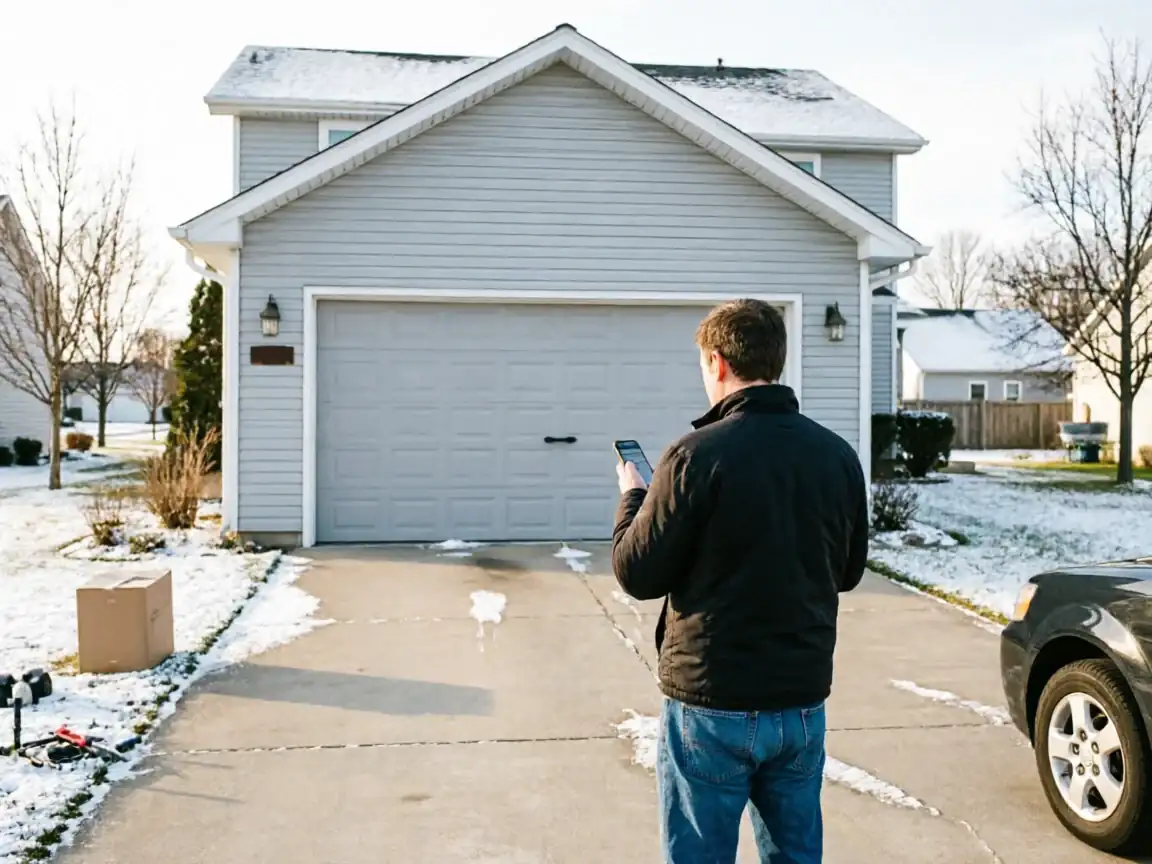
Doing It Yourself
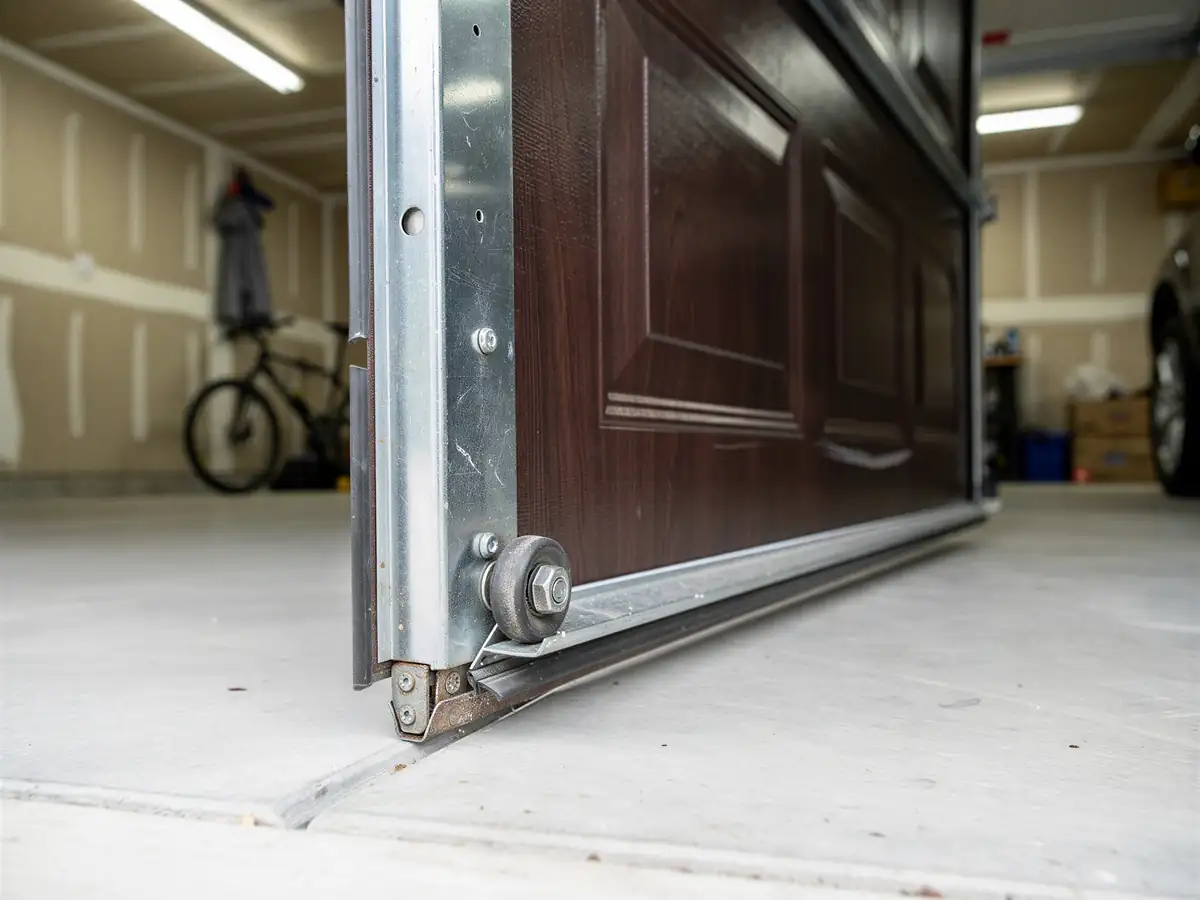
Saylorville is a small place, about 1,400 households, which means an off-track door here isn't a problem we see every day the way we might in a bigger suburb. When it does happen, it usually comes down to the age of the hardware. Most of Saylorville's homes went up around 1983, and that era used galvanized steel track that's thinner gauge than what gets installed today. Thirty-plus years of expansion and contraction loosens the brackets holding that track to the jamb, so a door that looks like it jumped the track is often really a bracket pulling away from old, softened wood.
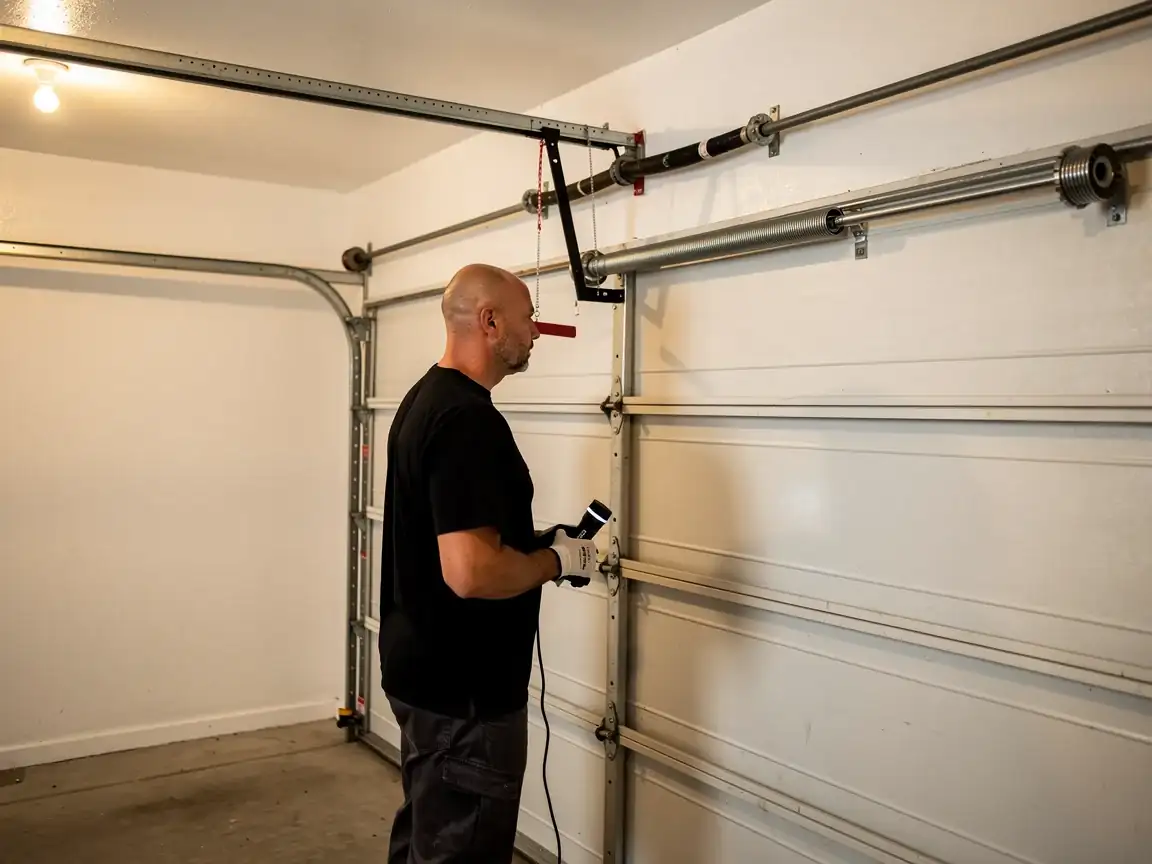
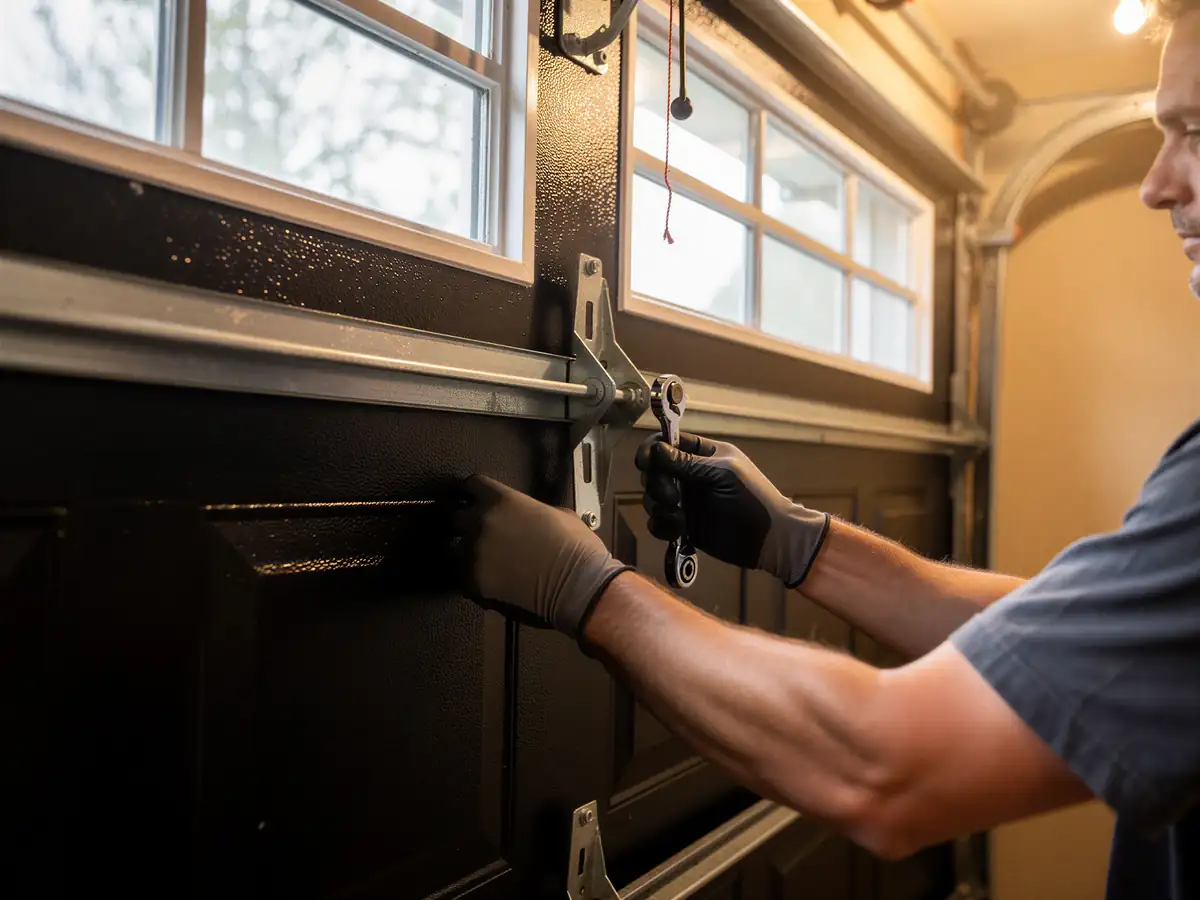
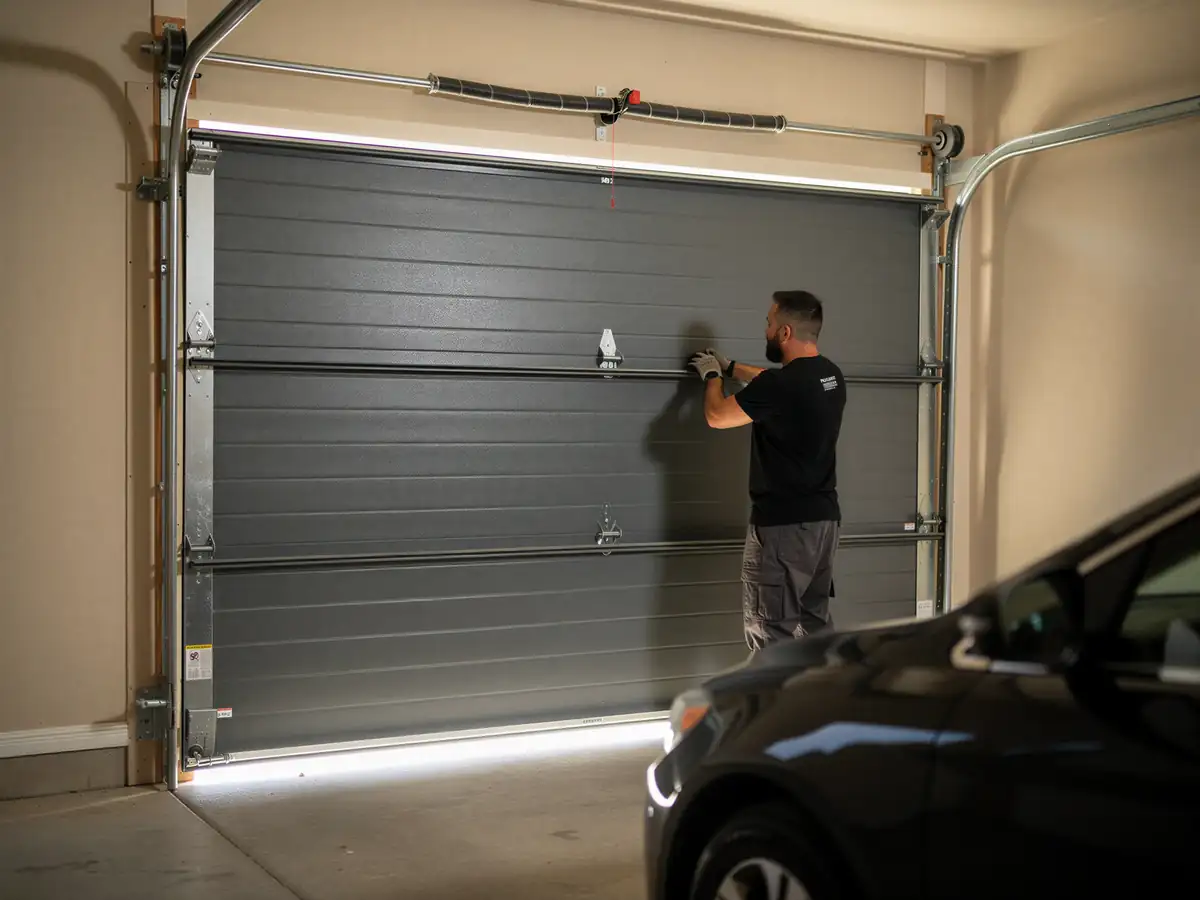
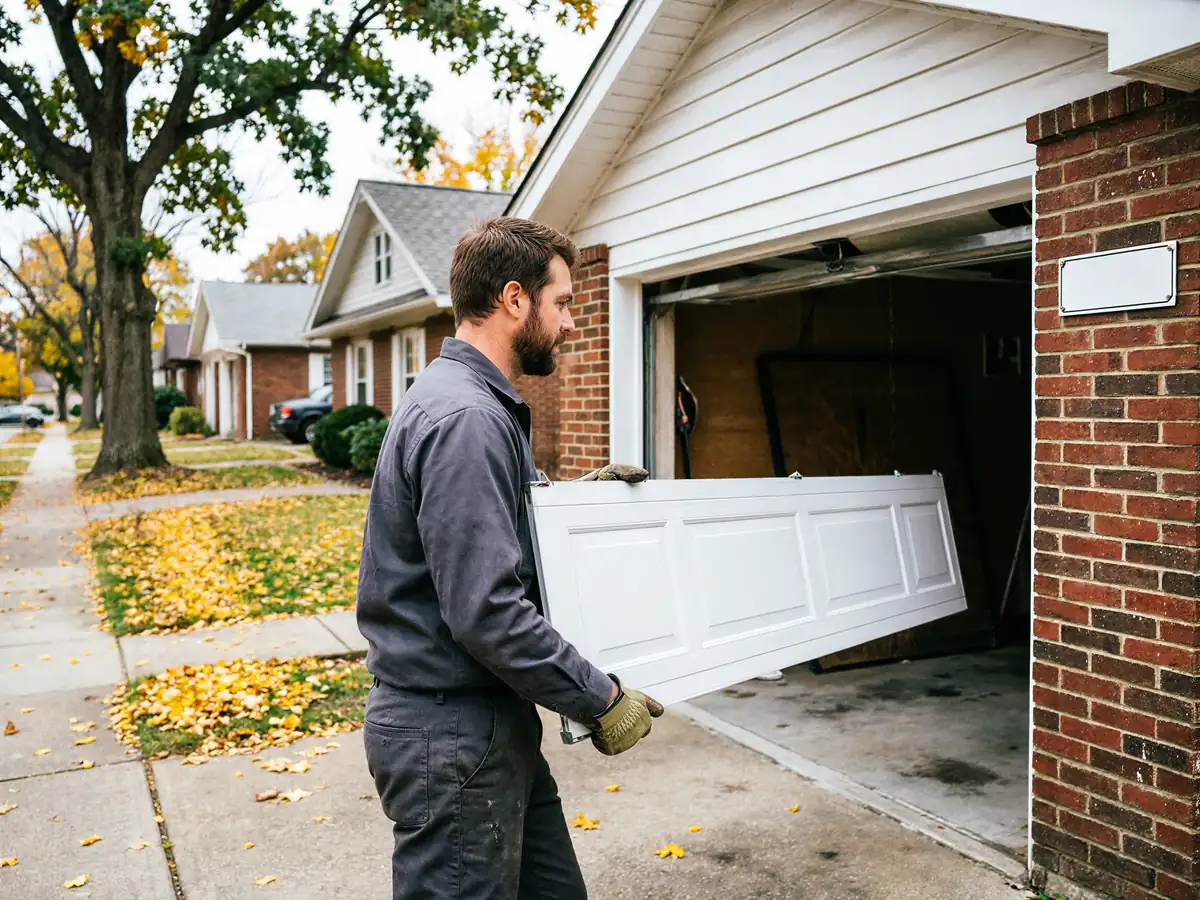
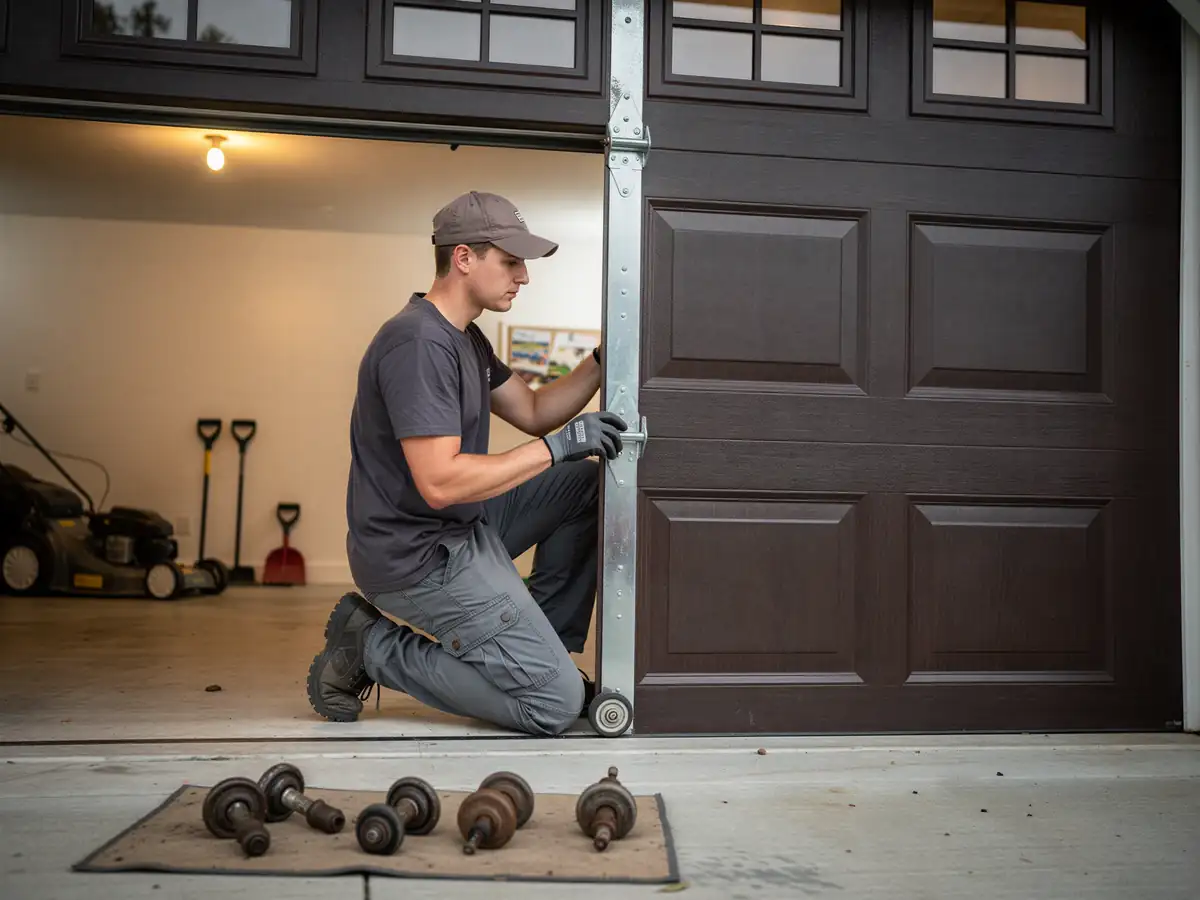
You can try to muscle a panel back onto the track yourself, but if a cable's come off the drum or a bracket is bent, you're working against spring tension you can't see from the garage floor. That's the part that puts people in the ER, not the track itself. If the door came off square and the track isn't visibly bent, it's sometimes a two-person job with the right bar and patience. If it came off crooked, stop and call it in.
The Cost of This Job
We don't publish a flat number for off-track repair because what it actually costs depends on what failed first. A door that slipped a roller off a straight section of track is a different job from one where the track itself bent, or where a bracket pulled loose from the framing. On houses built around 1983, which covers most of Saylorville, we're also checking whether the rollers and hinges are original - if they are, they're usually worn enough that putting the door back on the same hardware just invites a repeat call in a few months.
We'll give you a number after we've looked at the door, not before. What we won't do is quote a repair over the phone sight unseen, because guessing wrong either shorts you or oversells the job. If the track is bent in more than one spot, replacing that section usually costs less in the long run than repeated straightening, and we'll say so even if it's not the bigger job.
How Long It Takes
The time on site depends on what's actually wrong, not on how far we drove to get there
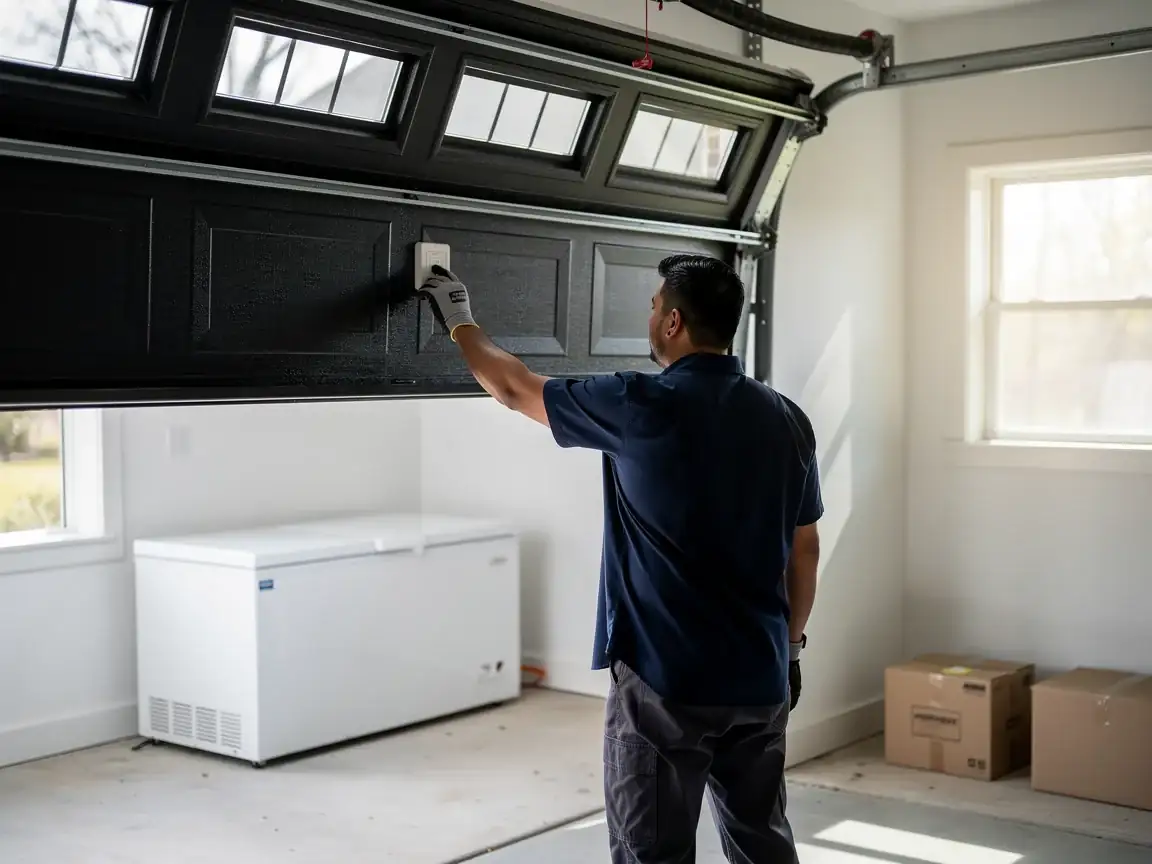
A door that popped one roller off a straight run of track is a short fix once we're set up. A door with a bent track, a pulled bracket, or a cable off the drum takes longer, because we're replacing hardware instead of just realigning it.
Houses from the 1983 era in Saylorville tend to have single-car and standard double-car openings rather than the wider doors you see in newer construction
Which keeps the panel lighter and the job more straightforward once we know what's broken. We're coming from Ankeny, about 4 miles away, so travel time is short and doesn't stretch out your appointment the way a longer drive would. What does stretch a visit is a track bent badly enough that it needs full replacement rather than a straighten-and-realign.
- 4 miles
Getting It Booked In
We run this job out of Ankeny and cover Saylorville as part of that territory - there's no separate branch or crew based here, just a short drive. At 4 miles out, Saylorville sits close enough that an off-track call doesn't require working around a long travel window the way some of our farther stops do.
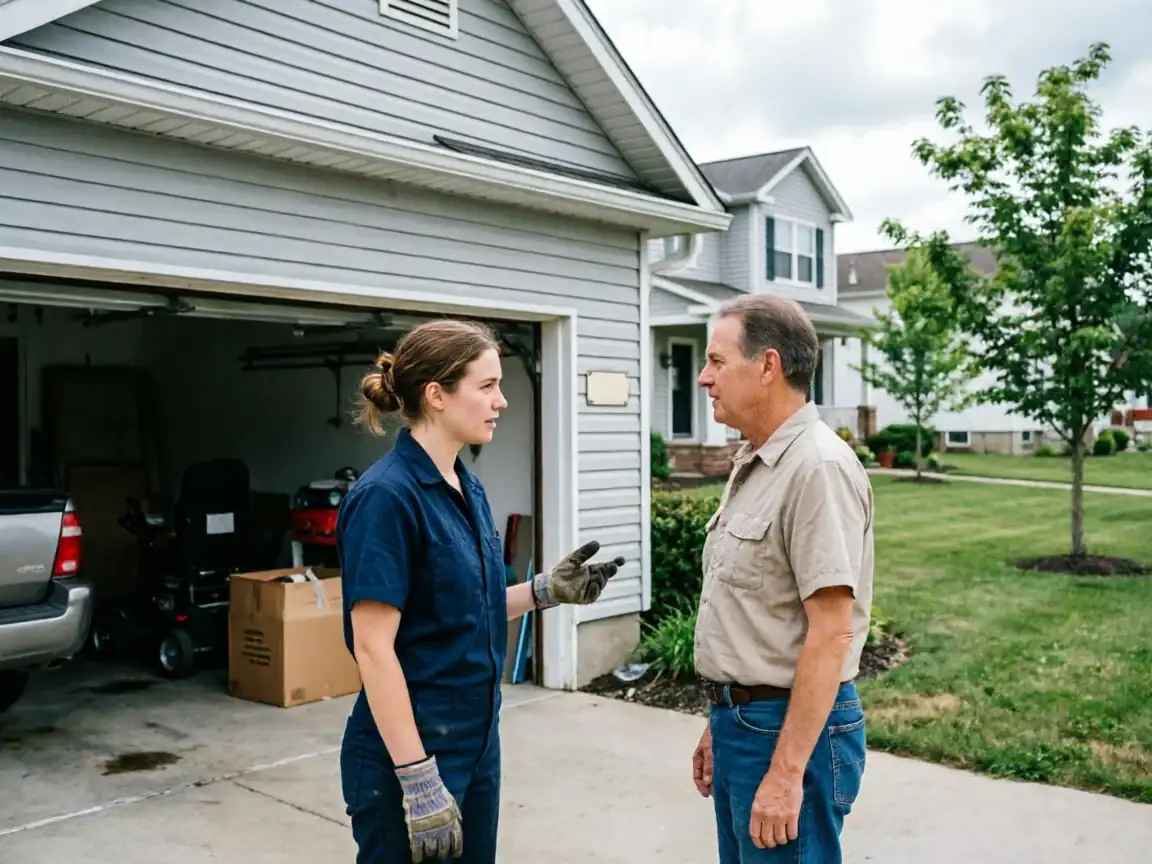
When you call, tell us whether the door is hanging crooked, whether a cable looks slack or off the drum, and whether you can see daylight between the track and the wall bracket. That tells us what to bring. For more on how we work this side of the service area, see our Saylorville area page. If you want the broader rundown on off-track repair as a service rather than this suburb specifically, that's covered on our Ankeny off-track repair page.
Why This Fails Locally
Saylorville's housing stock centers on 1983, which puts a lot of local doors on original or first-replacement hardware that's now past its expected life. Steel track from that period is lighter gauge, and the mounting brackets were often fastened straight into jamb framing that's since shrunk and shifted with three-plus decades of seasonal movement. That's a cold-climate problem as much as an age problem - repeated freeze and thaw works screws loose a little more every winter.
With roughly 1,400 households, Saylorville doesn't throw off the call volume of a bigger suburb, so the failures we do see tend to cluster around that same housing age rather than showing up at random. A median household income of $80,250 here also means most of what we hear is a request for a straight repair quote rather than a push toward full replacement, so we try to make the repair-versus-replace call honestly rather than defaulting to the bigger job.
What Can Go Wrong
The most common version of this call is a roller that's worked loose from a worn track and hopped the rail on one side
Usually on the bottom panel where the door takes the most stress opening and closing. Next most common is a bracket that's pulled away from aging jamb framing, which lets the whole track lean out of alignment even though the track itself isn't damaged.
Less common, but worse, is a cable that's come off the drum on one side
Which can let a panel drop at an angle and bind hard against the track. If that happens with the spring still under tension, don't try to force the door back - that's where people get hurt. And if the track is bent in more than one place, straightening it rarely holds for long; at that point we'll usually tell you replacement is the better money, even though it's not what gets us a bigger invoice.