What the Weather Here Does to It
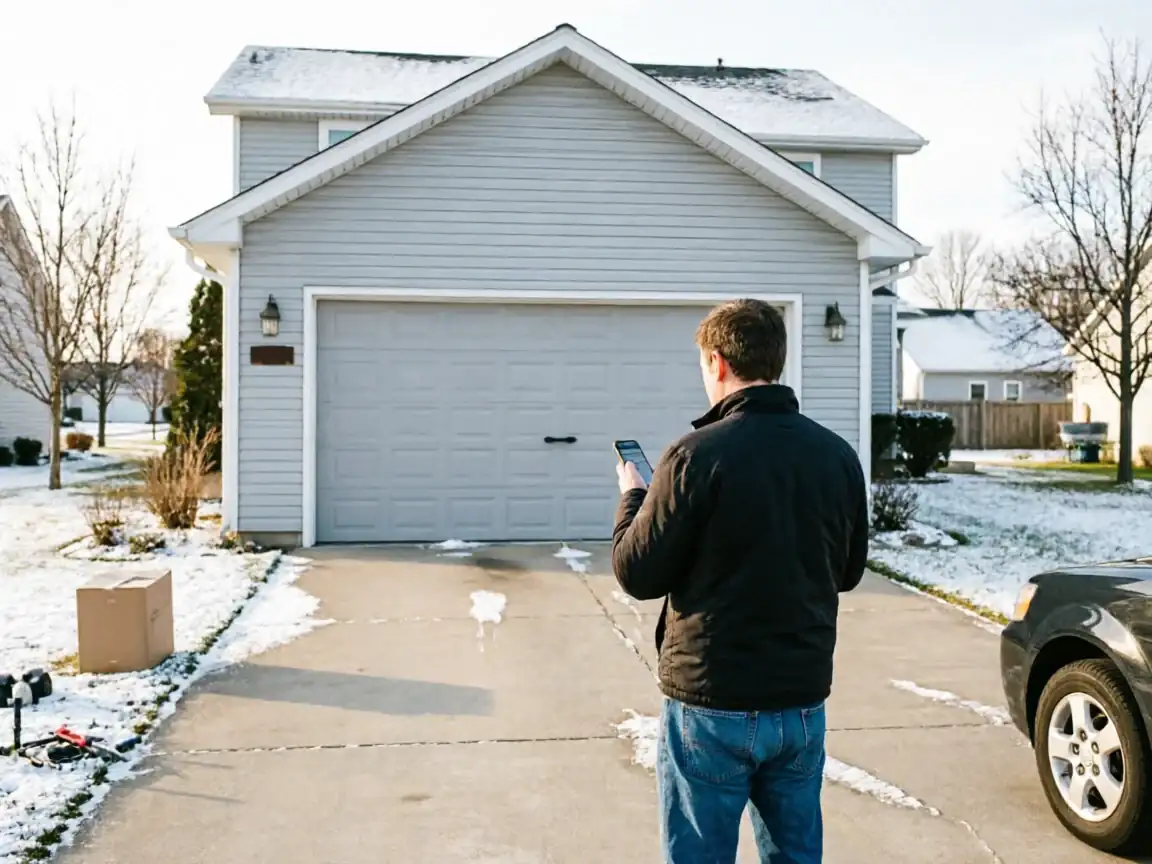
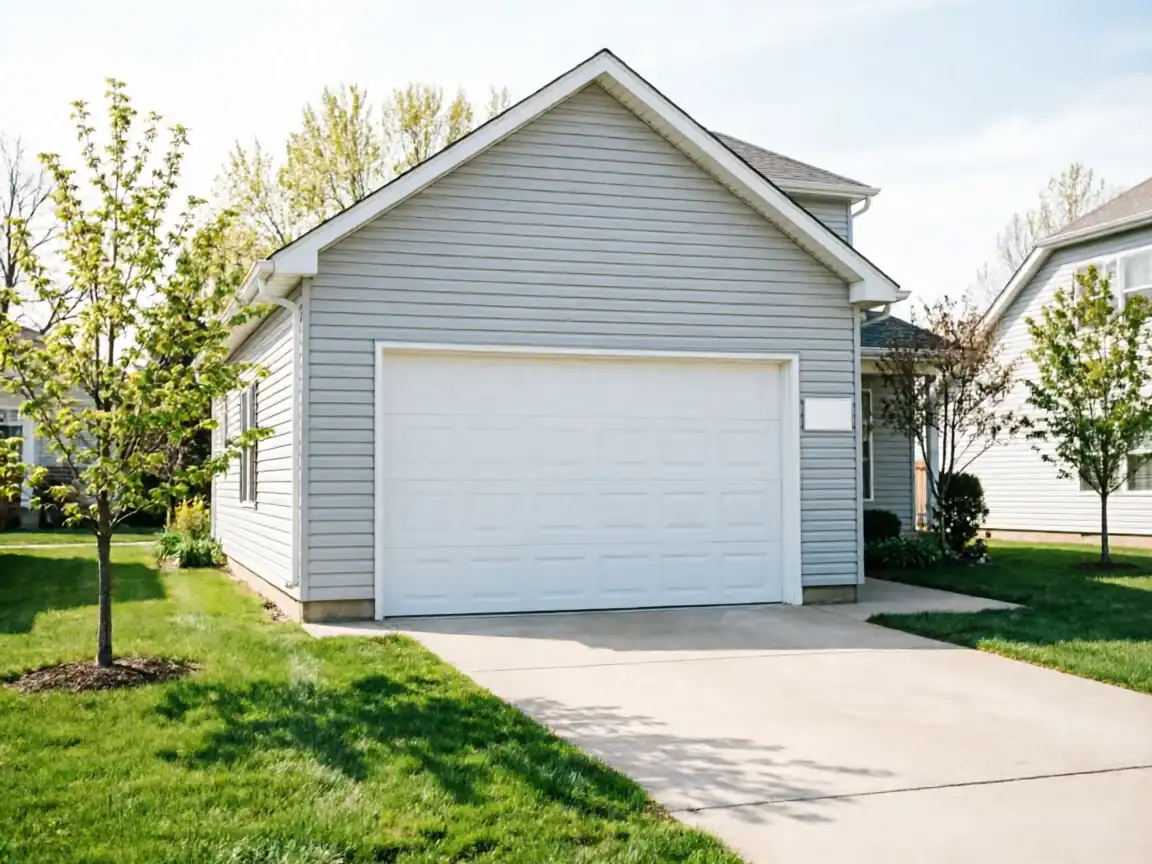
Ankeny sits in a cold moderate climate band, which means the hardware on your door goes through a real freeze-thaw cycle every winter, not a mild one. Steel springs contract in the cold, grease thickens, and the torsion bar that felt fine in October can bind or snap in January. Most of the housing stock here was built between 1941 and 2009, with a lot of it concentrated in the 1980s and 90s, so a good chunk of the doors we're called out to are now thirty-plus years into weathering that cycle.
On an older slab, cold doesn't just stiffen the spring, it also shrinks the weatherstrip at the bottom of the door, which lets more cold air and moisture into the track than the builder ever accounted for. That moisture sits on steel rollers and brackets that were galvanized decades ago and the coating is thinner than it was new. A service call in deep winter usually turns up at least one part that's been quietly rusting since a fall rain, not something that failed overnight.
We can't tell you the exact overnight low that's coming this week. What we can tell you is that a door built to 1990s-era spec, sitting through another Iowa winter, is the kind of job we see most.
What Is Going On
A standard torsion spring is rated for somewhere around 10,000 cycles, and a family door here sees two to four cycles a day. Do that math against a house built around the median year for this area, 1993, and you land on a spring that's likely been swapped at least once already, maybe twice. If nobody's touched it since the original installer left, it's past due.
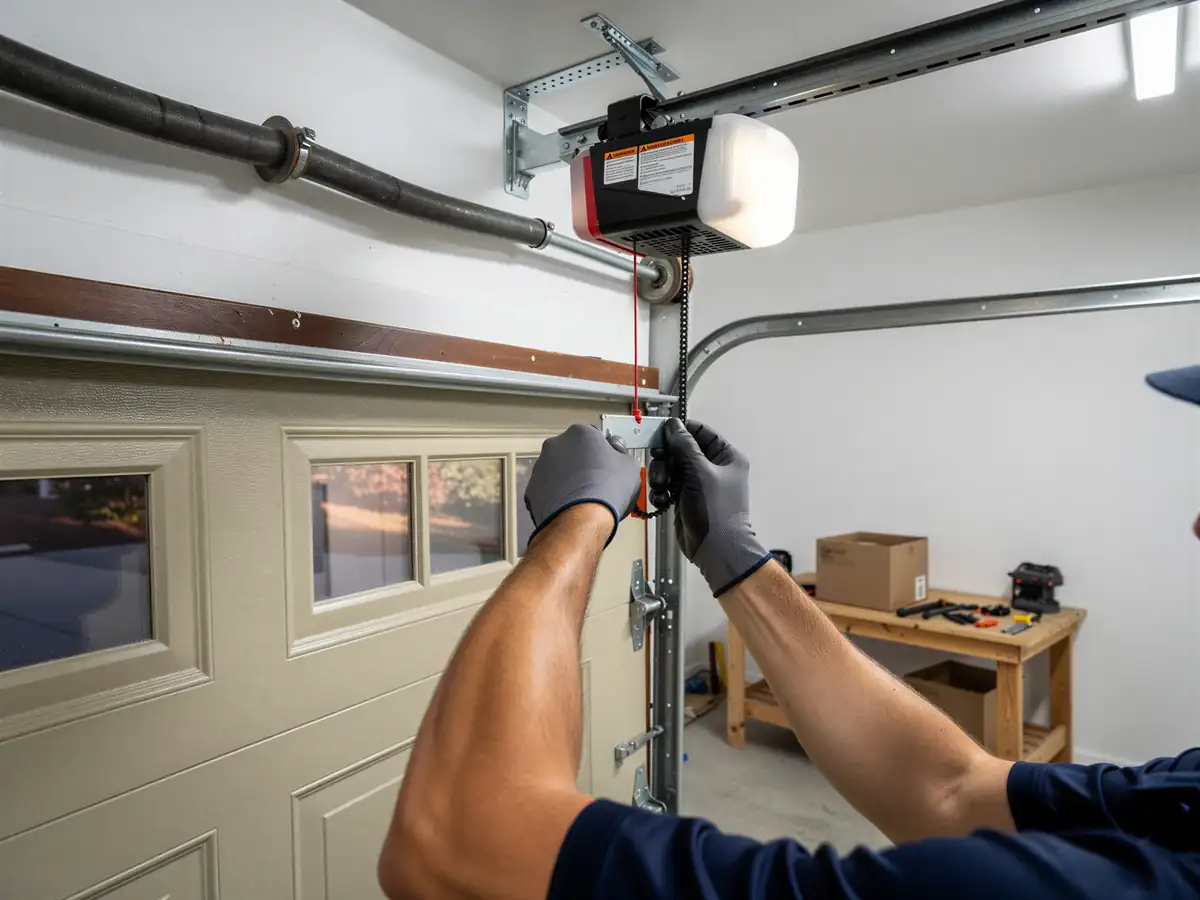
With most of the stock across the area dating to the 1980s and 90s, we run into a fairly narrow band of common openers and track widths - older chain-drive units, steel tracks sized for doors that are a hair narrower than what's sold today. That consistency is useful: it means we can usually diagnose a no-start or a grinding opener over the phone before we even get in the truck, because the symptom tends to match the era.
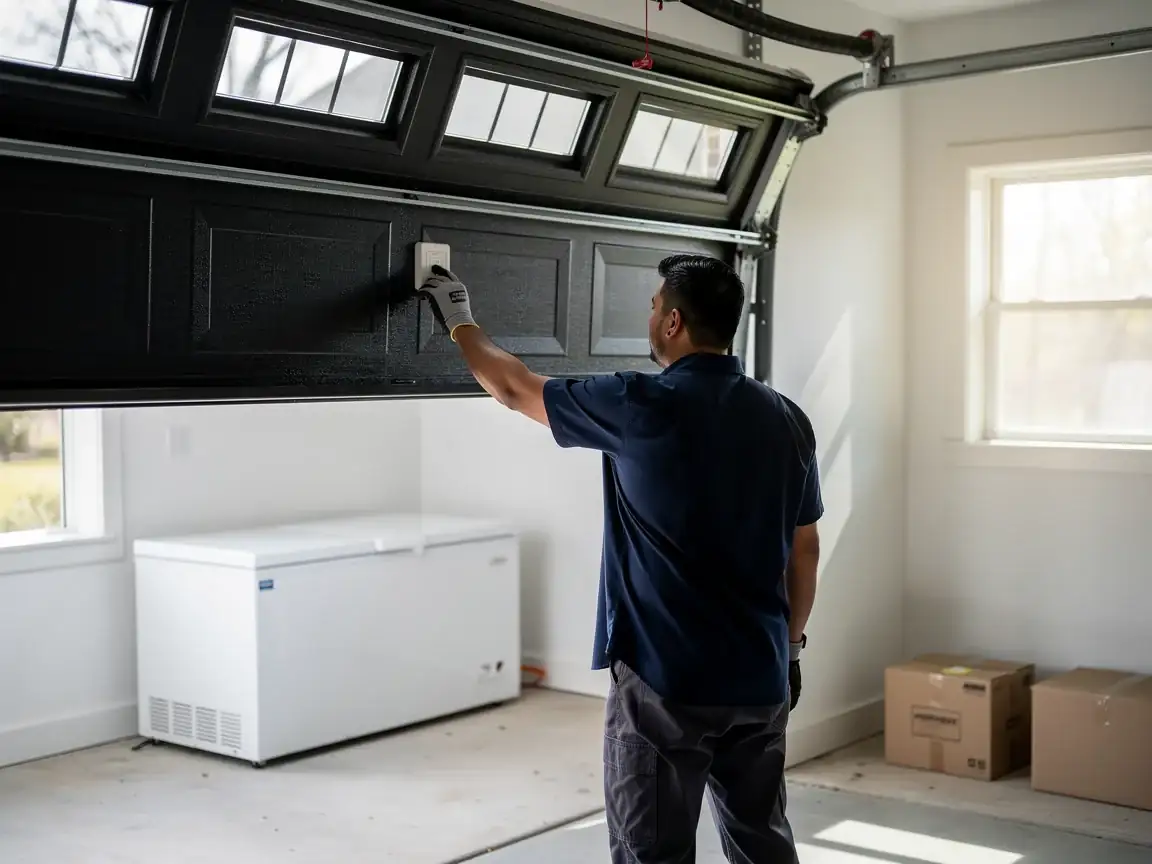
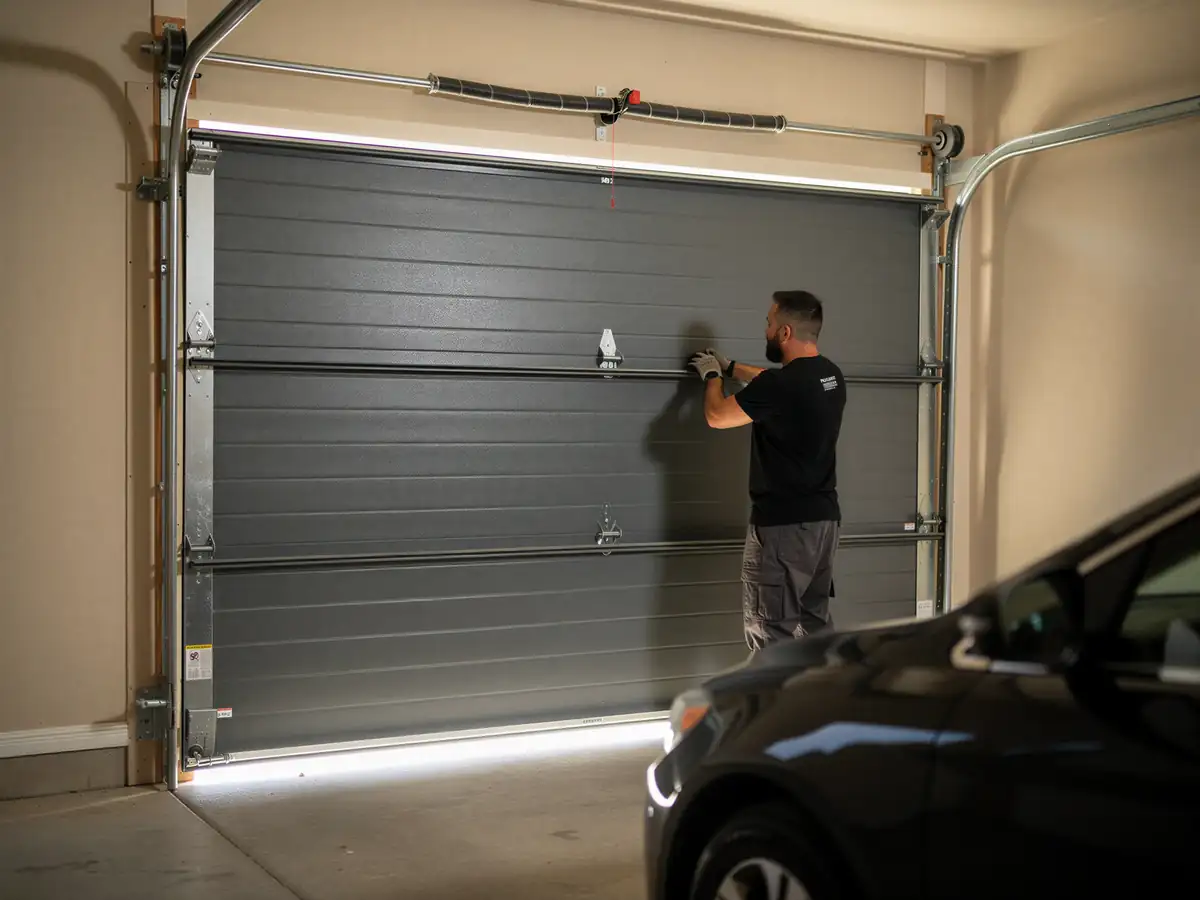
What's actually going on, most of the time, is not one dramatic failure. It's a spring that's lost tension, a cable that's frayed from one more winter of rust, or a sensor that's drifted out of alignment because the bracket holding it has flexed over thirty years of slab settling. None of that is exotic. It's just cumulative, and cold weather is what tends to finish the job.
What to Look At First
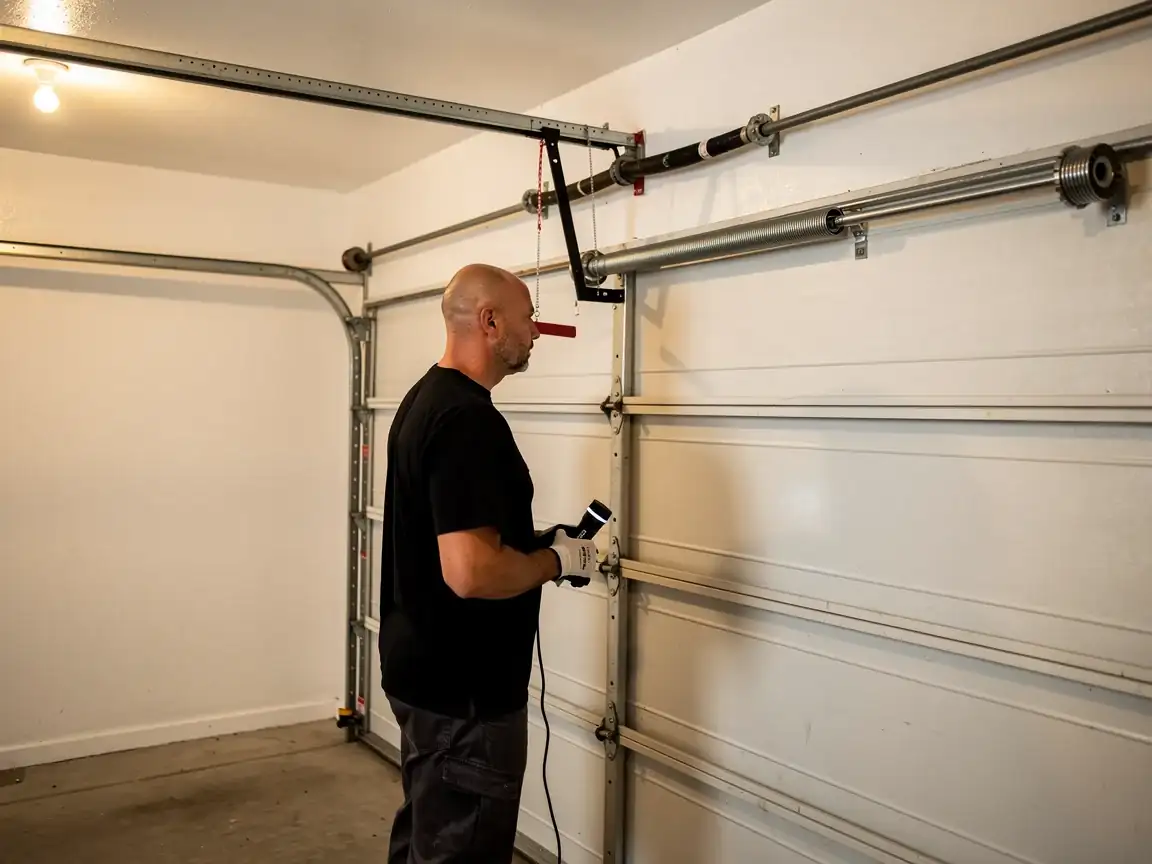
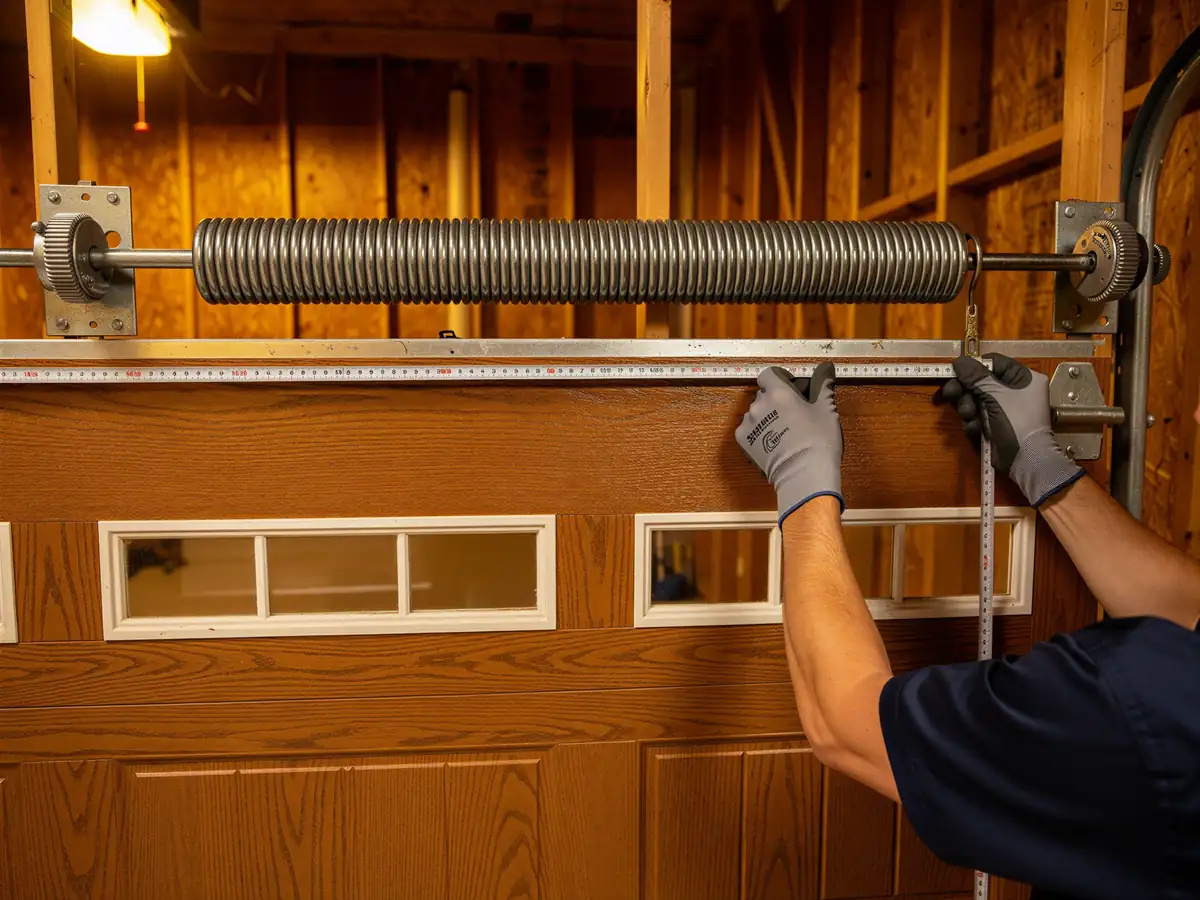
Before you call, look at the springs above the door
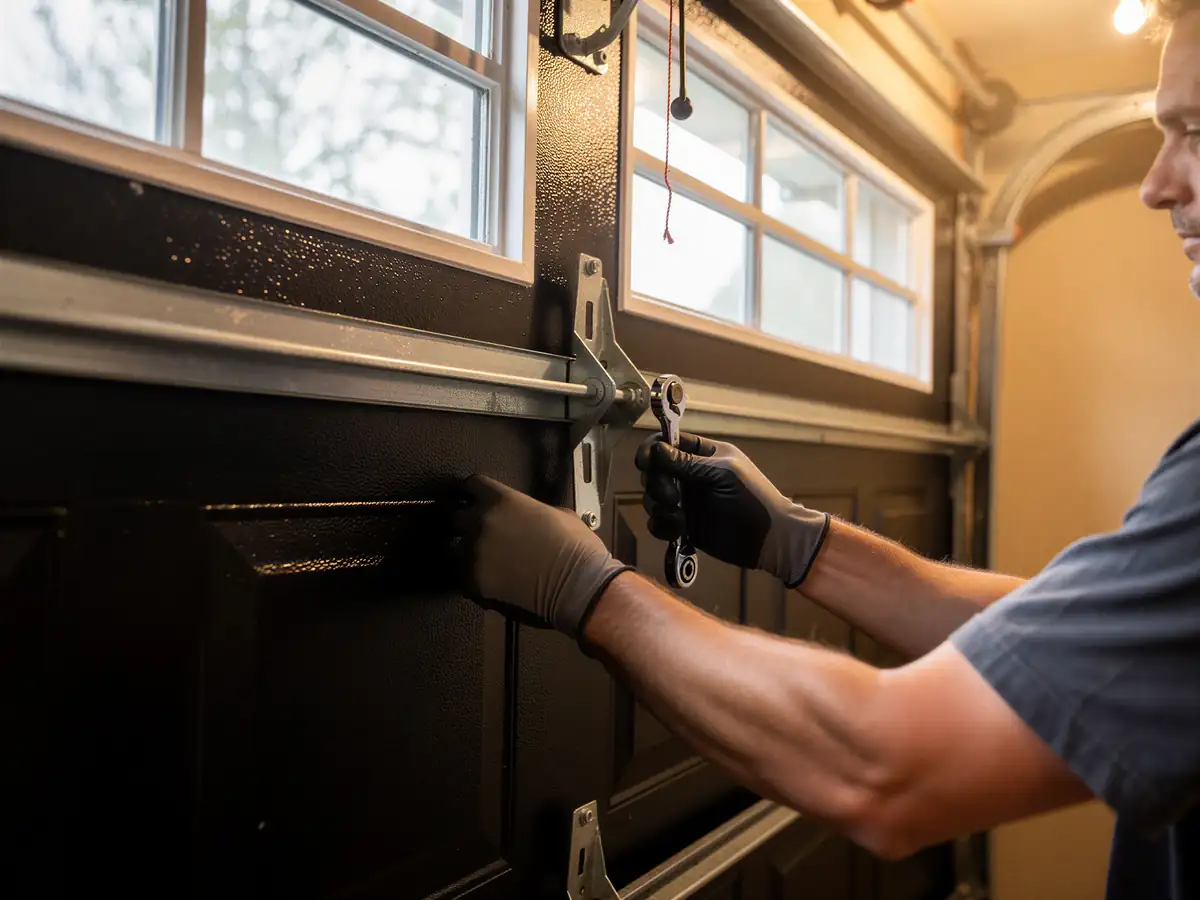
If you see a visible gap where the coils have separated, or one side sagging lower than the other, that's your answer - don't try to open the door by hand to test it. On a house from the 1980s or 90s stock that's common around here, check the bottom corner brackets too; those are steel, and thirty years of winter condensation in an unheated garage is enough to rust a bracket through from the inside.
Next, run a hand along the track for rust flaking or a rail that's pulled away from the wall
Cold causes the wood framing behind it to shrink slightly over the decades, and the lag screws loosen. If the opener is original to a house built in that 1980s-90s window, check whether it still has a mechanical travel limit screw rather than digital settings; that tells us the model family before we arrive and saves you a diagnostic fee.
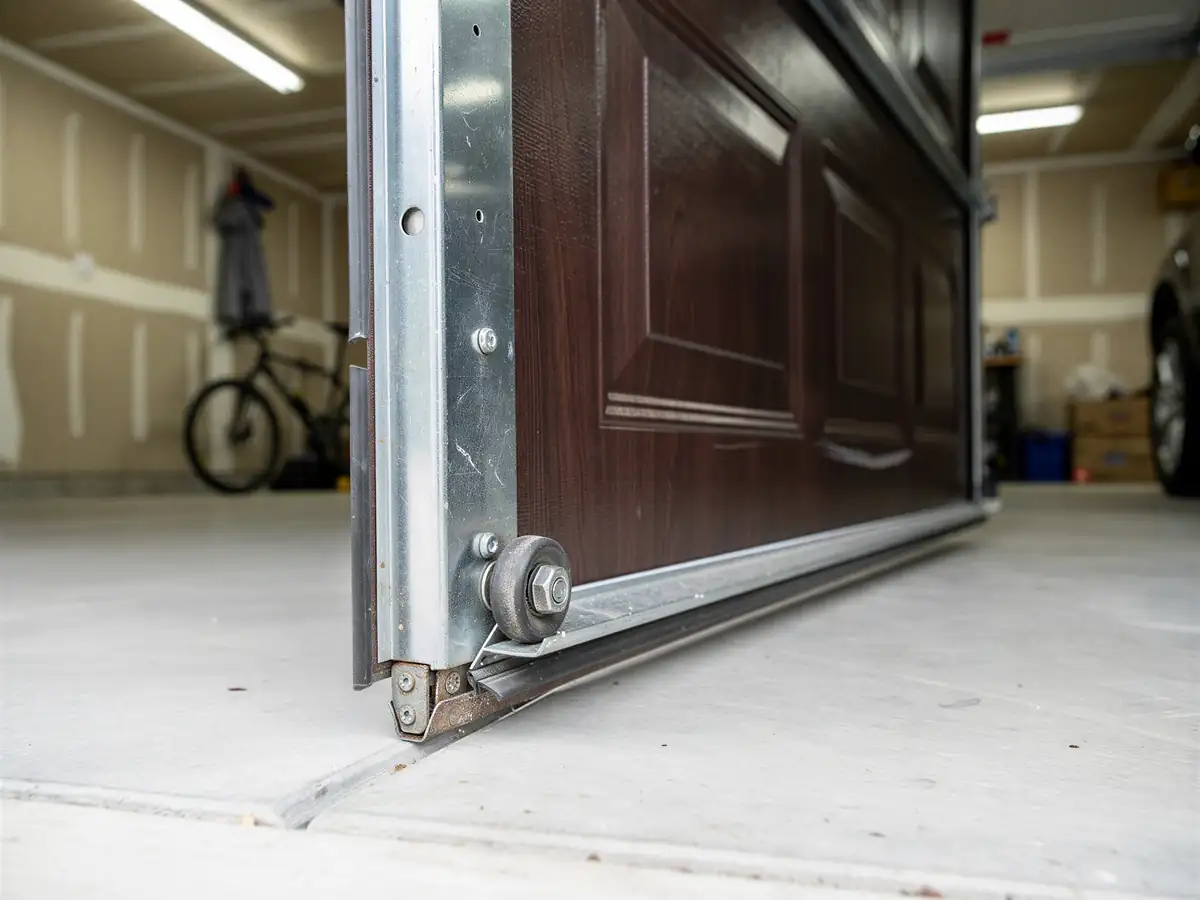
Last, feel for a cold draft at the bottom seal with the door closed
A flattened or cracked weatherstrip is cheap to replace and it's often the first thing that goes on a door this age, well before the spring or opener need attention.
Where People Go Wrong
The most common mistake is replacing one torsion spring and leaving its matched pair alone because the second one 'still looks fine.' Springs installed together age together, and a mismatched pair puts uneven load on the shaft - it'll fail again within a season, usually the one you didn't touch.
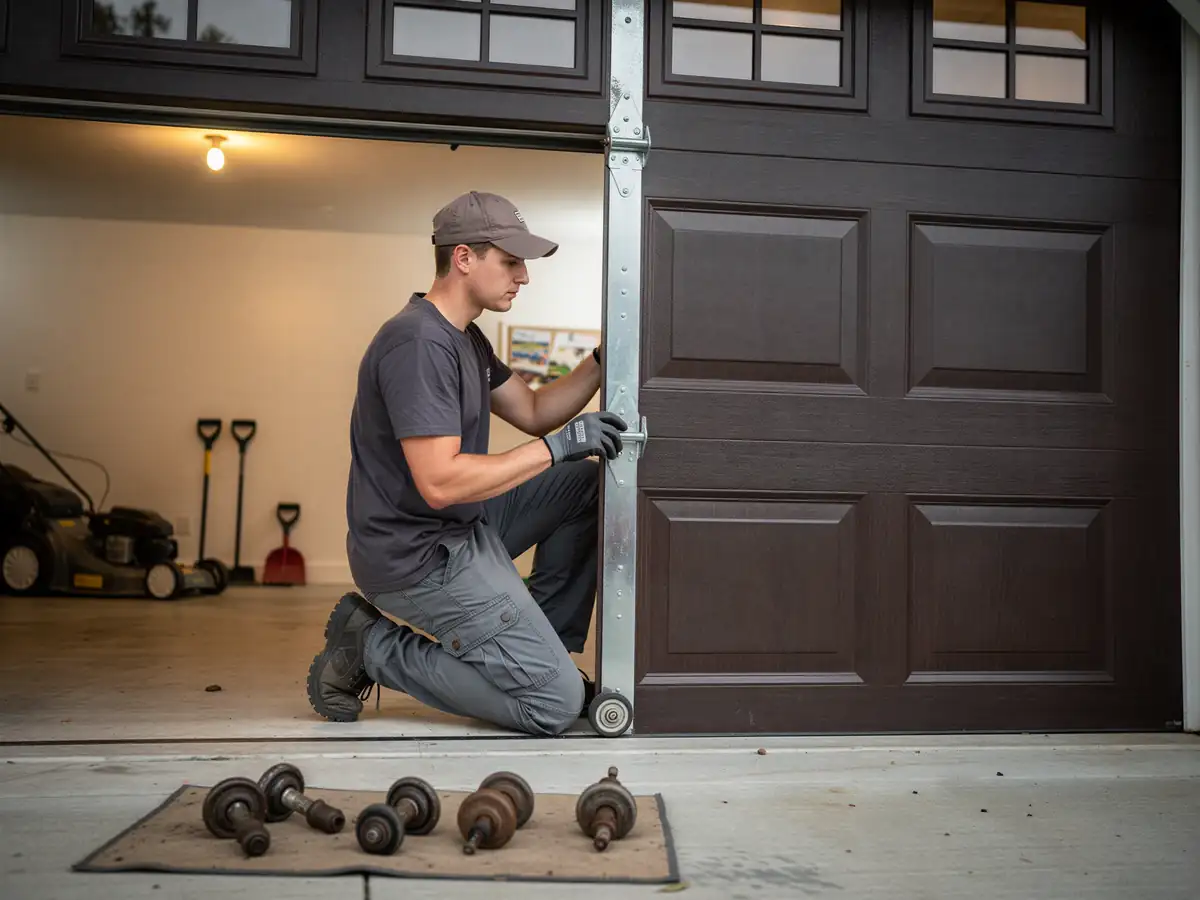
Second is reaching for a universal opener gear kit bought online for a unit that was installed when the house was built in the 1980s or 90s. Track widths and mounting brackets from that era don't always match what's sold today, and forcing a modern part onto older hardware strips the mount instead of fixing anything.
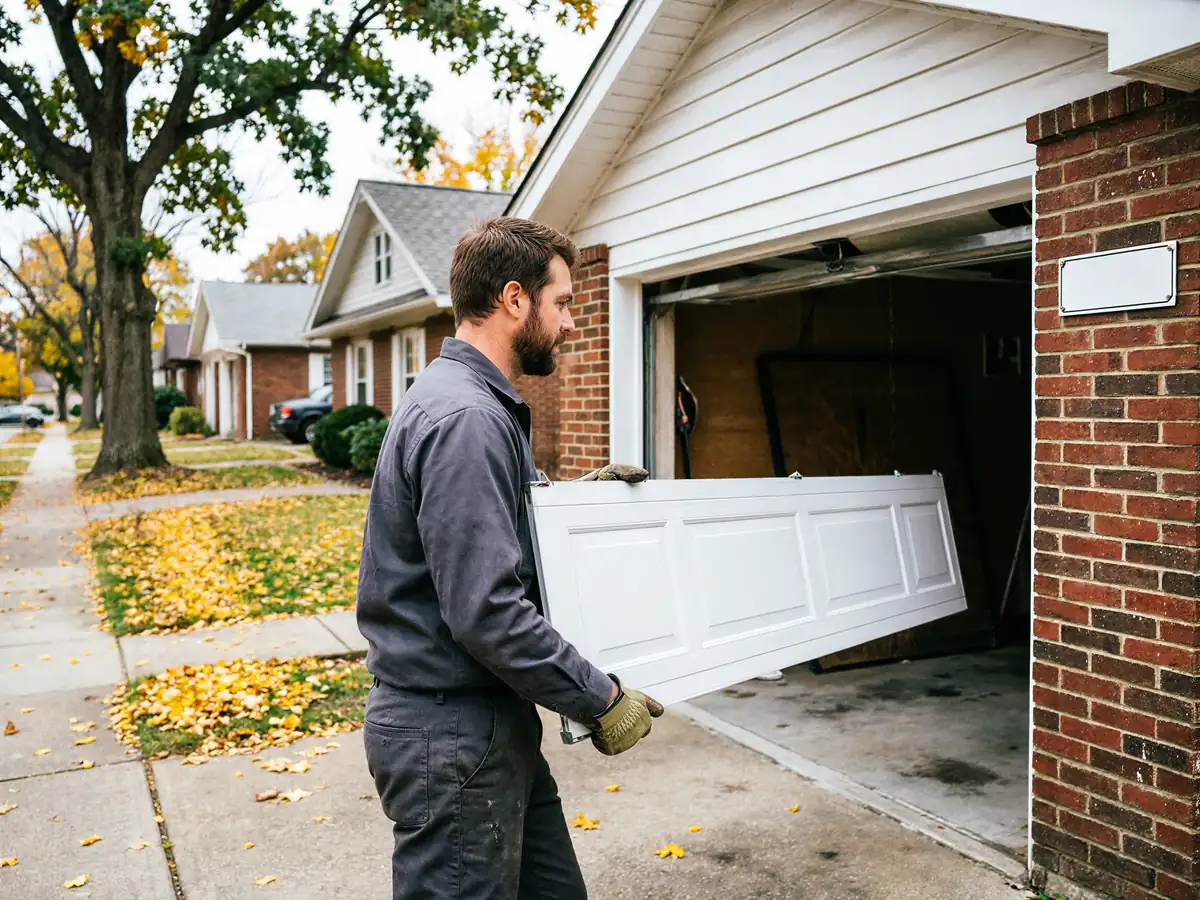
Here's the honest limitation: if your door is an older, discontinued panel profile, we don't always have a matching replacement panel on the truck or even in regional stock. Matching a specific door style from a house that age can mean a special order and a real wait, and sometimes the straighter answer is a full replacement rather than chasing a part that's hard to source. We'll tell you that up front instead of stringing out a repair that isn't worth it.