What the Weather Here Does to It
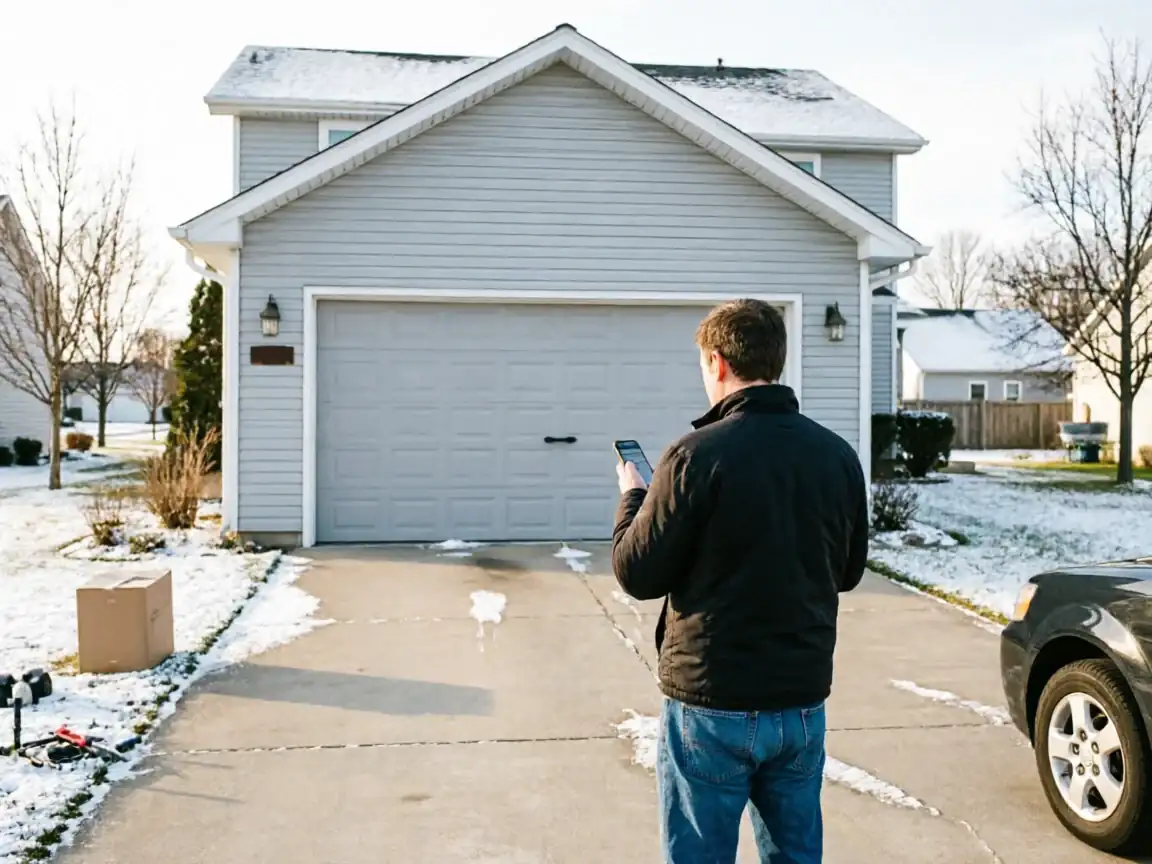
Ankeny sits in a cold moderate climate band, and that matters more to a garage door than most owners think. Steel contracts in deep cold, and a track that ran true in August can be a sixteenth of an inch tight in January. That sixteenth of an inch is where the squeal comes from. Grease that worked fine at 70 degrees turns stiff at 10, so rollers that were quiet all fall start grinding by the first real cold snap.
Housing in this area was mostly built between 1980 and 1999, which means most doors are riding on hardware that's lived through three or four decades of that freeze-thaw cycle. Lift cables stretch and re-seat. Hinges loosen in their screw holes because wood shrinks and swells with the season. None of this is damage from one bad day - it's the slow accumulation of forty Iowa winters on parts that were never rated to last that long.
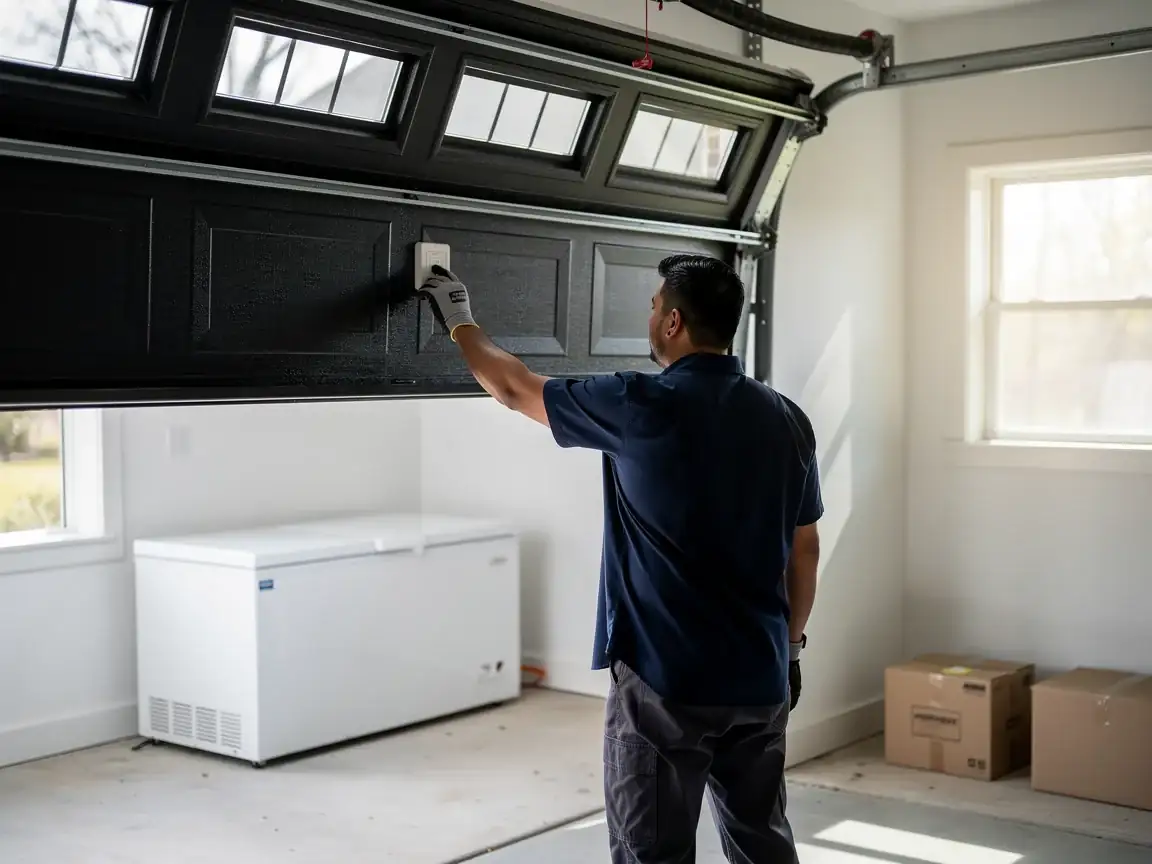
A door that bangs on the way down in cold weather is usually telling you the springs have lost tension faster than the cables stretched, so the door free-falls the last few inches before the opener catches it. That's a spring problem, not an opener problem, and it shows up more in January than June for exactly that reason.
What Is Going On
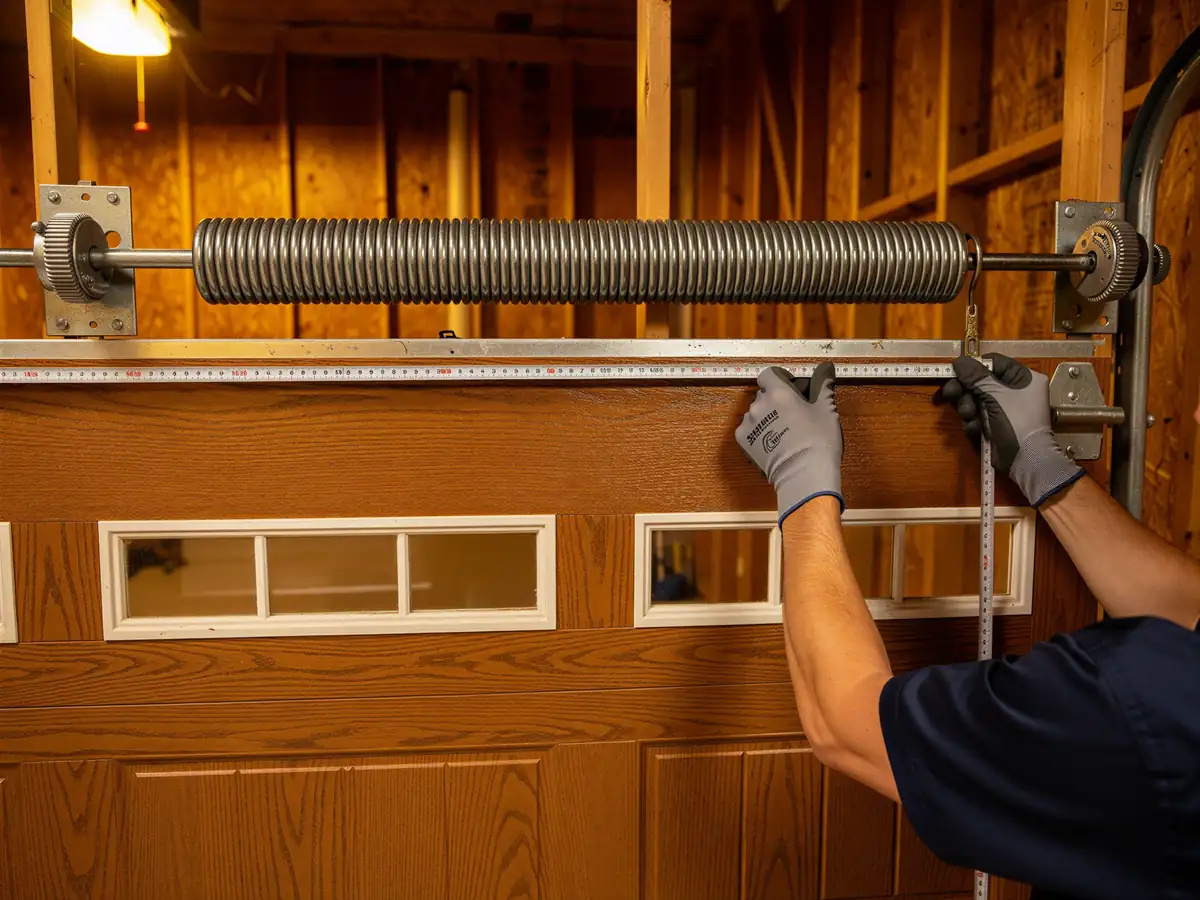
Most of the noise complaints we hear trace back to one of three things: the springs, the rollers, or the track alignment - and which one it is depends a lot on the age of the house. In the older pockets of Ankeny, built closer to the 1941-2009 range on the early end, you'll still find original extension springs mounted along the horizontal track. Those make a distinct twang or pop when a coil starts to go, different from the grinding sound of a worn roller.
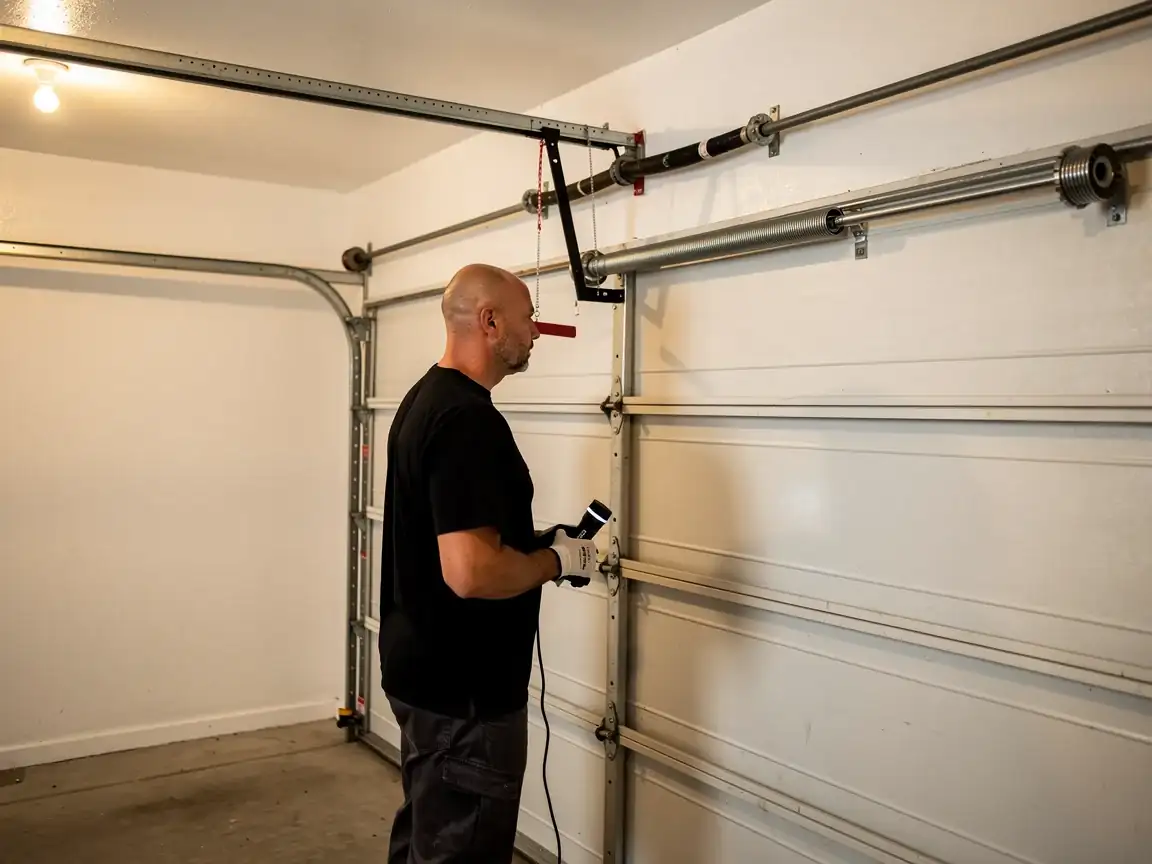
In the 1980s-90s stock that makes up most of the area, torsion springs over the header are more common, and the noise pattern shifts. A torsion spring failing sounds like a loud bang, often mistaken for something falling in the garage, because the spring unwinds fast when a coil snaps.
A rhythmic thump every few seconds as the door moves usually means a flat spot on a roller, not a motor issue. A high-pitched metal-on-metal squeal is almost always a roller or hinge that hasn't seen lubricant in a year or two. Grinding that gets worse as the door nears the top of its travel often points to a bent track section, something cold weather makes worse because the metal has less give in it.
What to Look At First
Before you call anyone, look at three things
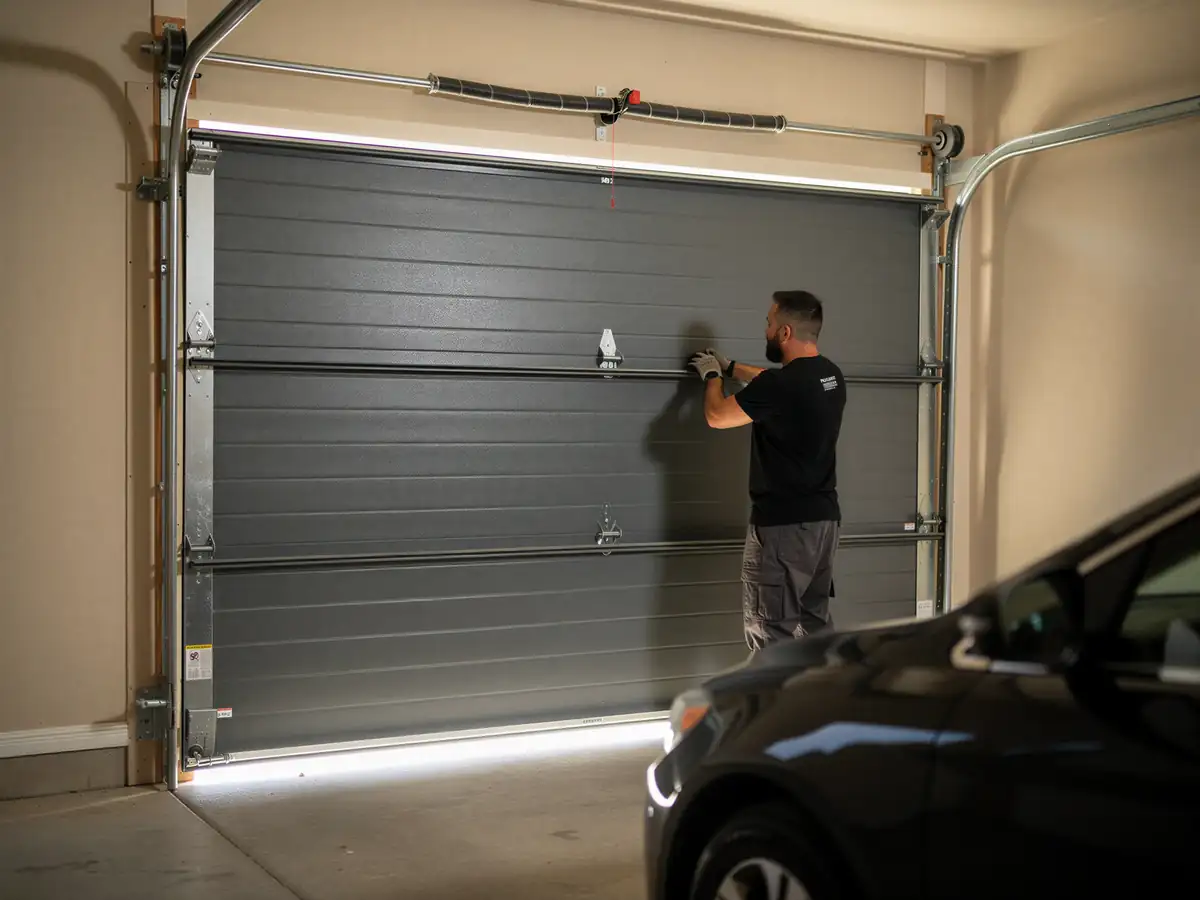
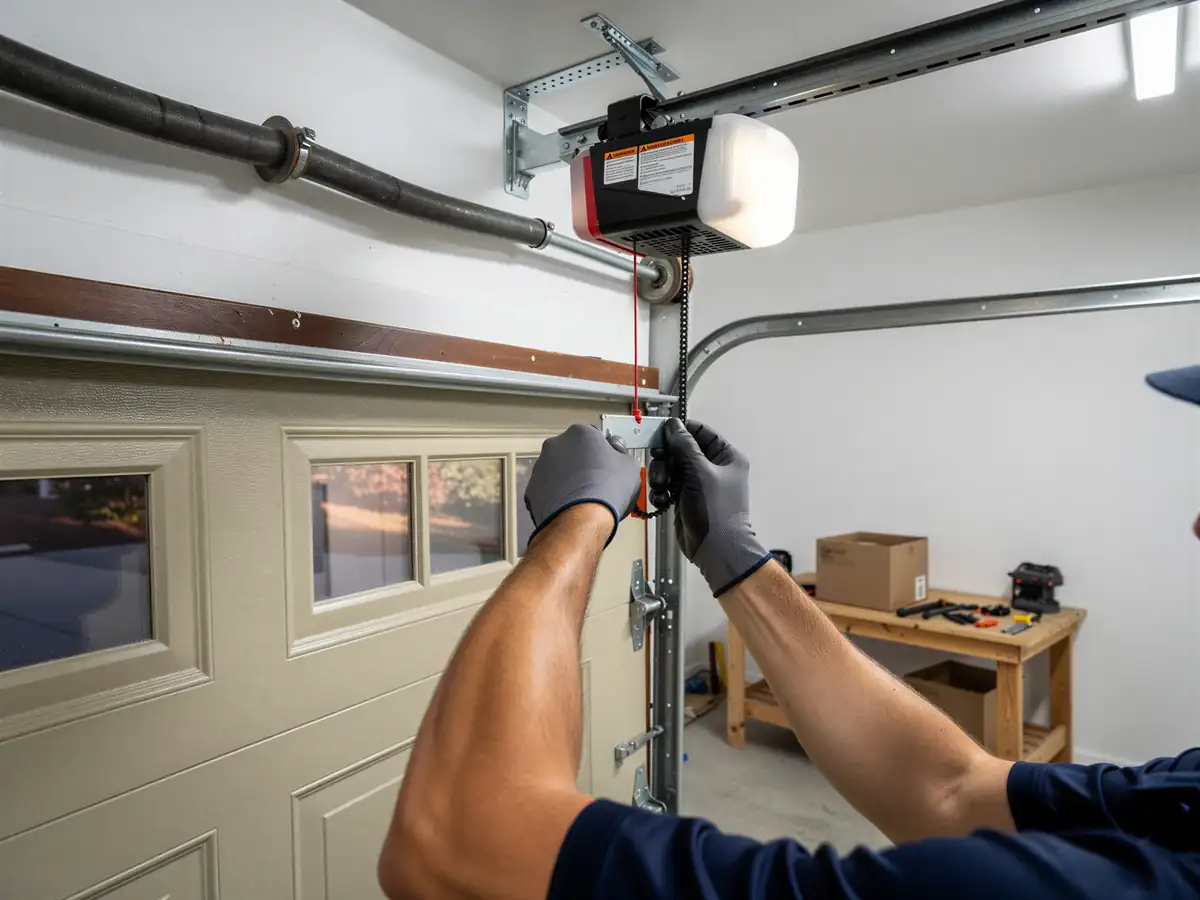
First, the springs - either the torsion spring above the door or the extension springs along the side track. A visible gap in the coil, or a spring that looks stretched unevenly compared to its mate, means it's close to done. Don't put your hands on it; a wound torsion spring under tension can do real damage.
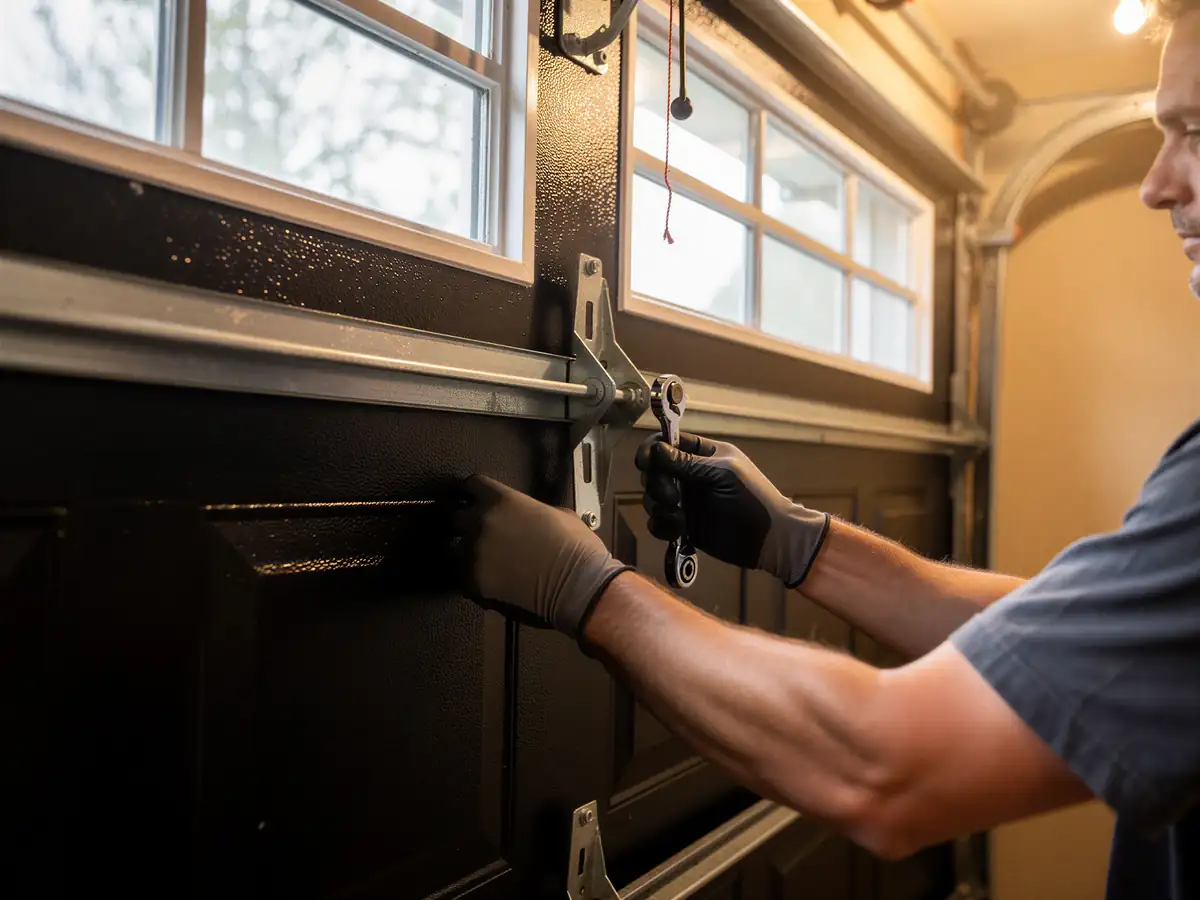
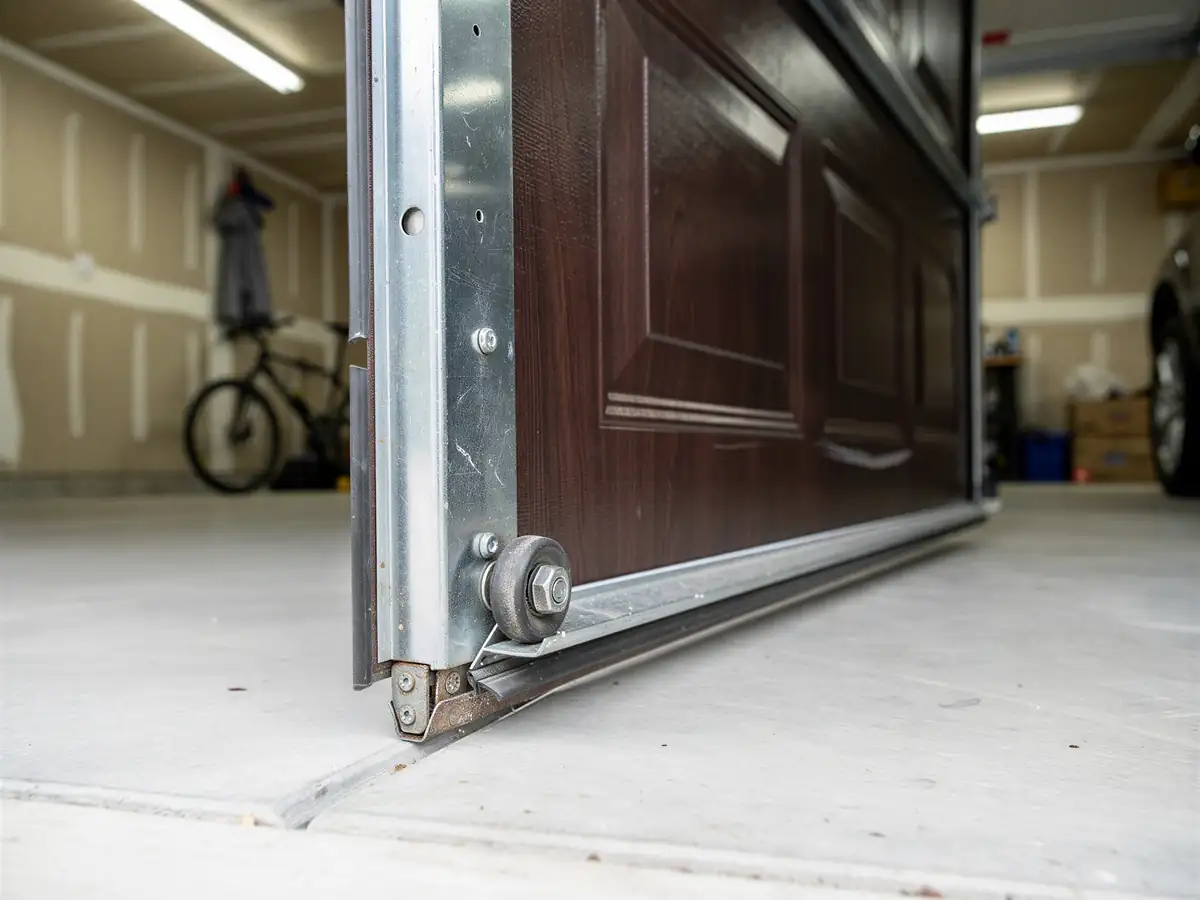
Second, check the rollers for flat spots or cracking
Especially if your house dates to the earlier end of the 1941-2009 range and still has the original steel rollers rather than nylon ones. Steel rollers are noisier by design and wear faster in cold weather.
Third, run your hand along the track for gaps, bends, or spots where it's pulled away from the wall bracket
A track out of alignment by even a quarter inch will grind every time the door passes that point, and cold contraction tends to expose that gap rather than cause it outright.
If you hear a noise that's new, loud, and sudden
A bang rather than a gradual change - stop using the door and call. That's the signature of a spring that's already failed or about to.
Where People Go Wrong
The most common mistake is spraying WD-40 on everything and calling it maintenance. WD-40 is a solvent, not a lubricant - it strips old grease off rollers and hinges and leaves them drier than before, which in cold weather makes the squeal worse within a week, not better. A proper lithium or silicone-based garage door lubricant on the rollers, hinges, and torsion bar does the job; WD-40 does not.
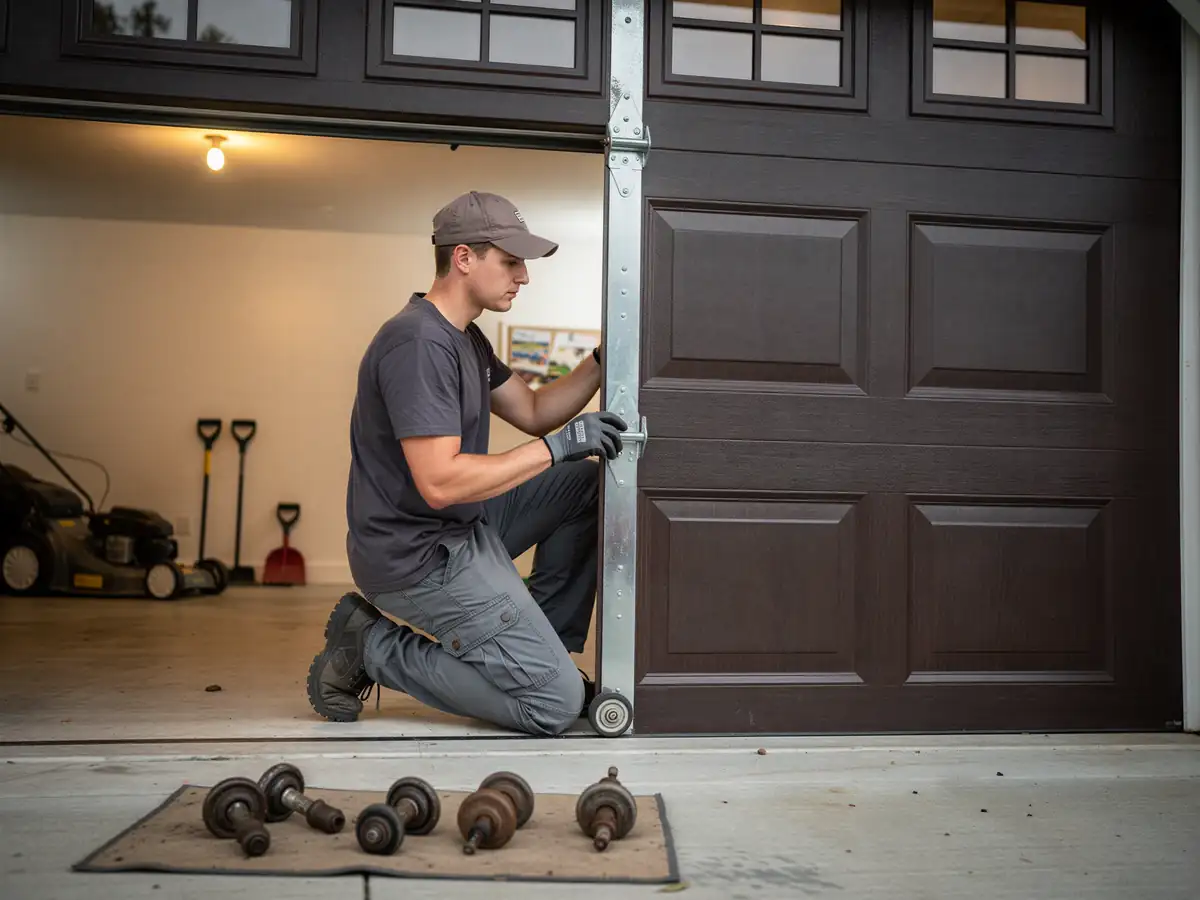
The second mistake is tightening everything in sight. Loose hardware is real, especially on houses from the 1980s-90s run where original screws have been working loose for decades, but over-tightening a hinge into softened wood just strips the hole further. Sometimes the fix is a longer screw or a repositioned bracket, not more torque on the one that's already there.
Here's the honest limit: if a spring has failed on a double door, that's not a five-minute fix and it's not something to do yourself. The spring is under real tension and the injury risk is serious. We'd rather you call and wait a day for the right part than try to wind a torsion spring in your own garage. That's the one job on this list we won't talk anyone through over the phone.