What the Weather Here Does to It
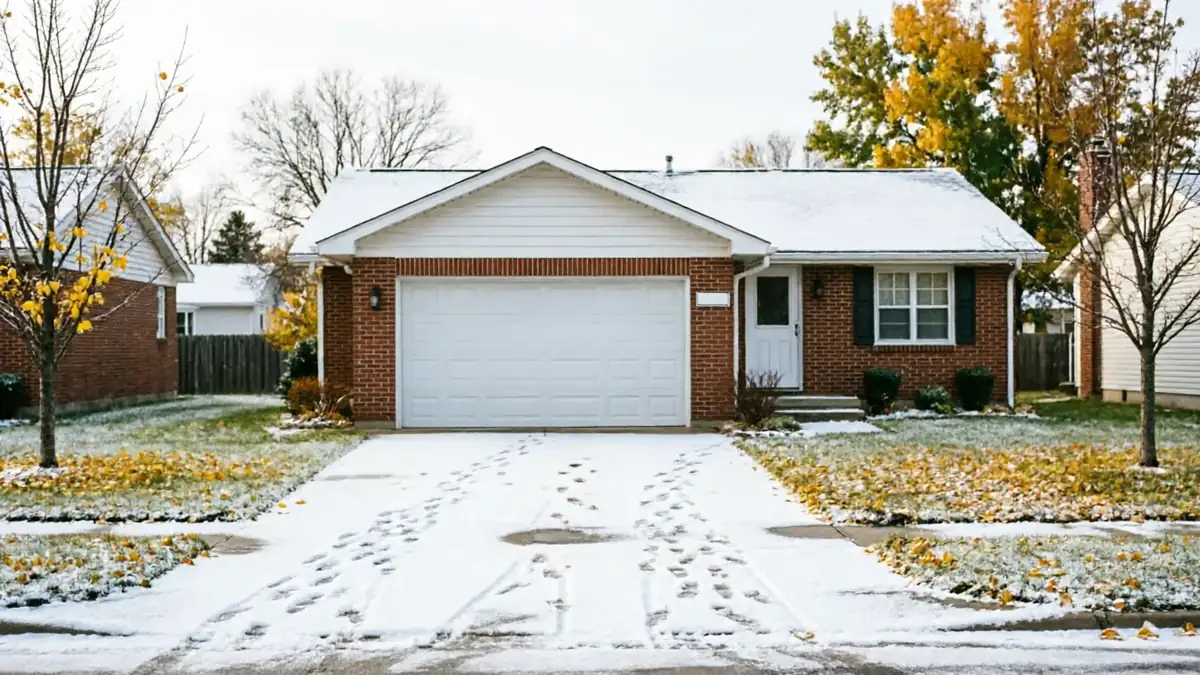
Ankeny sits in a cold-moderate climate band, which means winter doesn't just dust the driveway - it swings steel-spring tension hard and fast between a warm afternoon and a single-digit morning. Torsion springs store energy by twisting, and cold steel gets less forgiving under that twist. It doesn't snap because it's cold outside; it snaps because the metal has already fatigued over years of cycles, and a cold morning is often the push that finishes the job.
That timing matters more here than it would somewhere with a milder winter, because the housing stock across this service area was mostly built between 1941 and 2009, with the heaviest concentration going up in the 1980s and 90s. A spring installed with a house built in, say, 1987 is pushing thirty-five years old. Steel fatigue is cumulative - every open and close is a cycle, and a thirty-five-year-old spring has a lot of cycles behind it before the cold ever gets involved.
We're not saying every door with an older spring breaks in January. Most don't. But when one does go, it's almost always one of two things lining up: an aging spring from that 80s-90s build wave, and a cold snap that finally asks more of it than it has left to give.
What Is Going On
A torsion spring is rated for a number of cycles, not a number of years, but age and cold both chip away at that rating in ways that compound. Cold steel contracts slightly and loses some elasticity, so the same twist that was routine in August asks a little more of the spring in January. If that spring already has microscopic fatigue cracks from two or three decades of daily use - which is common in houses from the 1980s and 90s that make up most of the stock across this area - a cold morning is often what turns a hairline crack into a full break.
Openers feel the cold differently. Older chain-drive units bind up when grease thickens, and the motor has to work harder to pull a door that's suddenly heavier because the spring isn't doing its share of the lifting. Homeowners usually notice the opener strain first - a door that hesitates, grinds, or reverses partway up - days or weeks before the spring actually lets go.
This isn't a townwide event that hits every door the same week. It's a numbers game: thousands of homes, decades of spring age spread across them, and a stretch of cold mornings that finds whichever spring was closest to its limit.
What to Look At First
Start with the spring itself, not the opener
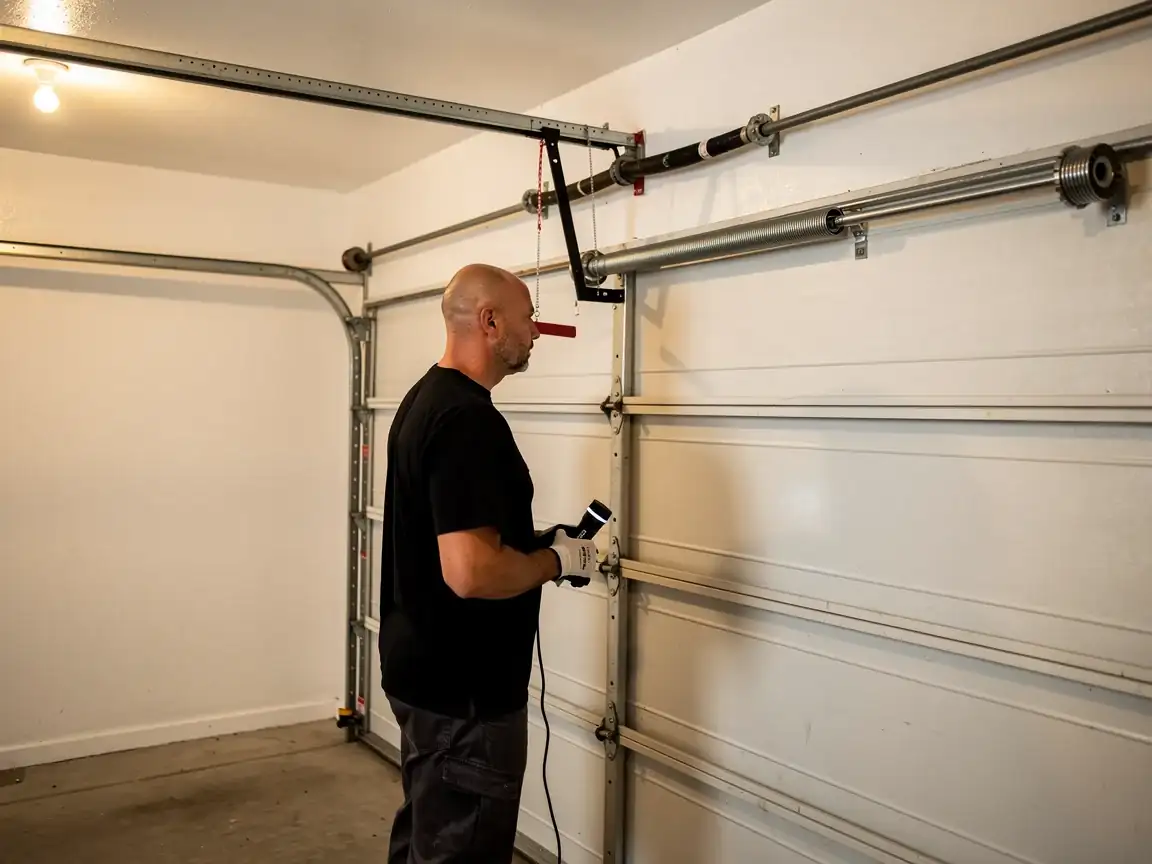
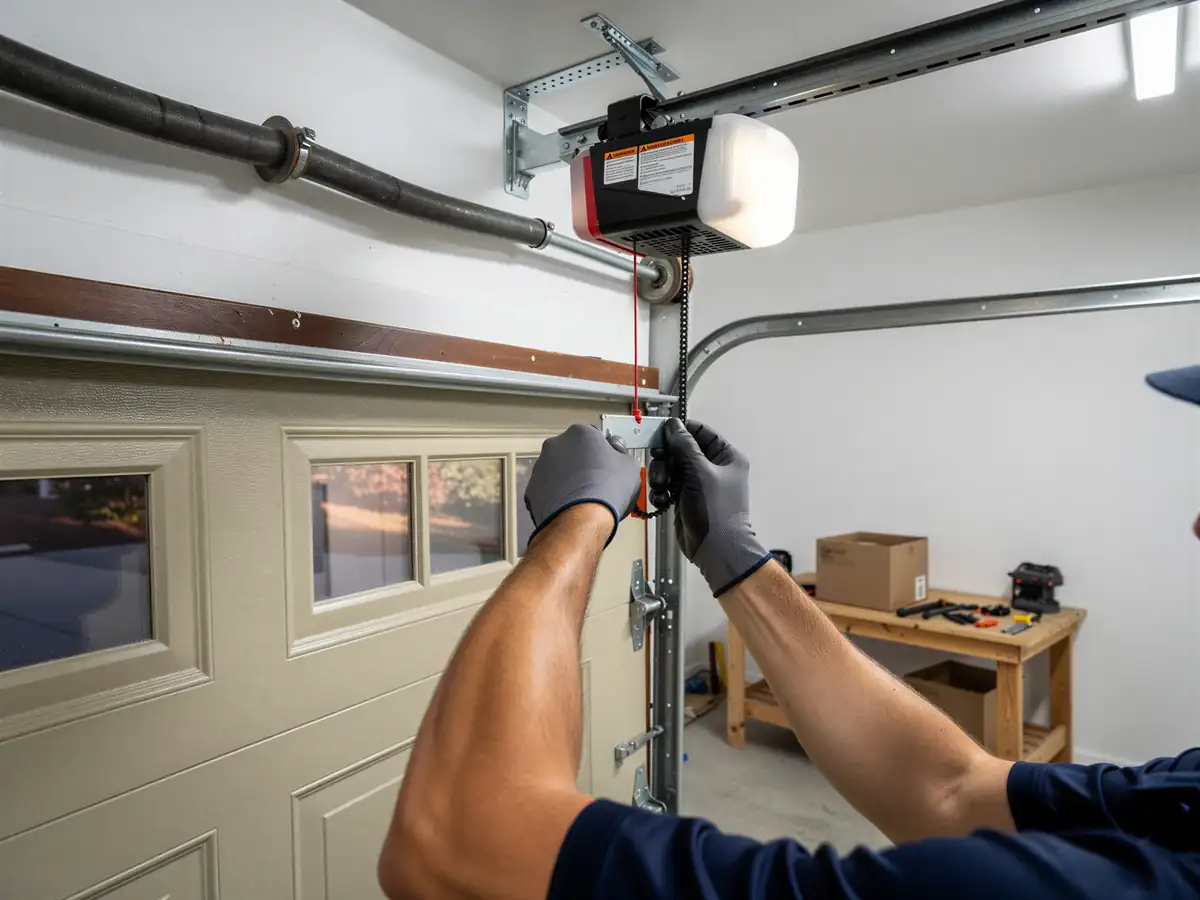
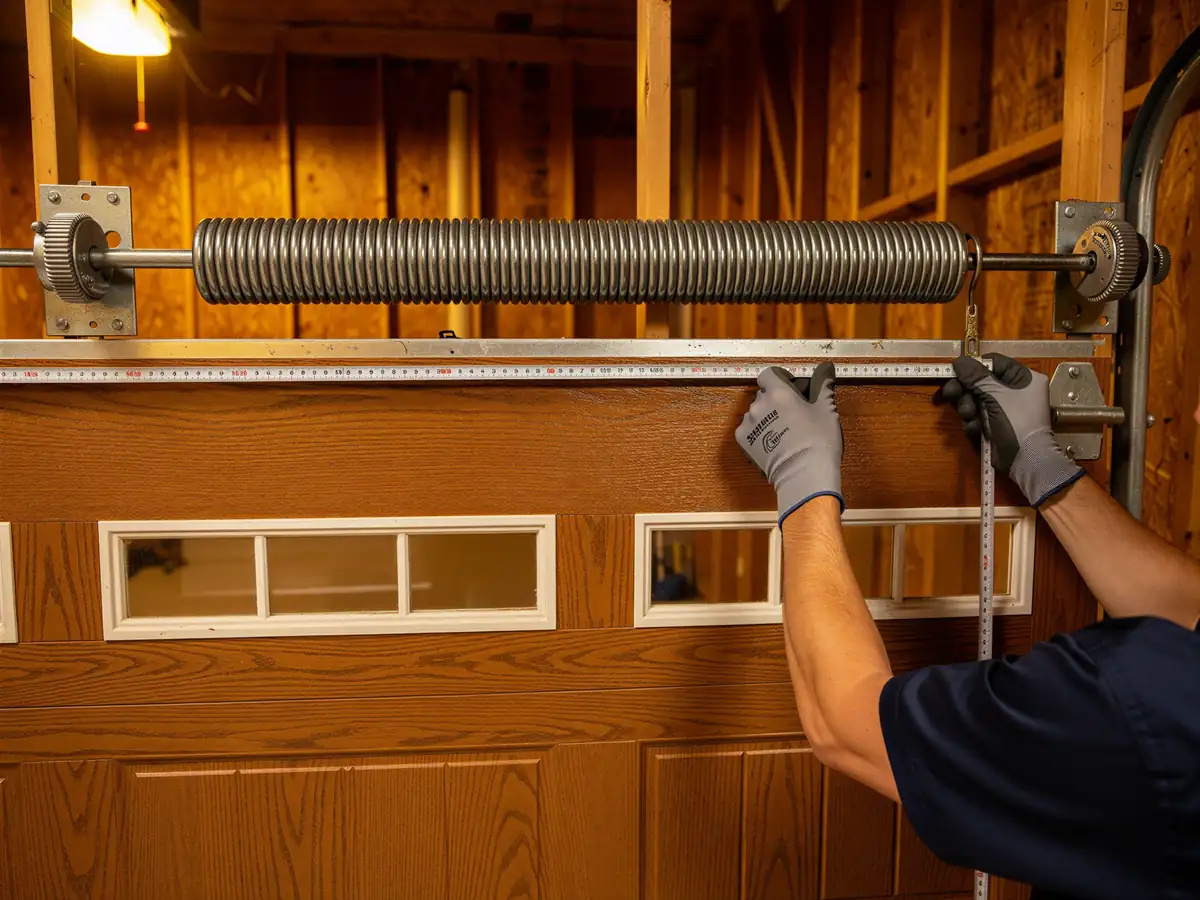
Stand under the door with it closed and look at the torsion spring above the header - if you see a visible gap in the coil or rust concentrated at one spot, that's a crack site, and it's a matter of time, not a matter of maybe.
Next, check the install date if you know it, or at least guess at the house's age
Given that most homes in this area were built in the 1980s and 90s, if your house falls in that window and you've never had the spring replaced, you're carrying original or close-to-original hardware into its fourth decade. That alone is worth a look before the cold gets worse, not after.
Listen to the opener on a cold start
A motor that strains, clicks, or takes a beat longer than usual to get the door moving is telling you the spring is carrying less of the load than it should. That's an early warning, and it's a cheaper fix to catch now than after a cable snaps under the extra strain.
Finally, look at the cables for fraying near the bottom bracket
Cold makes brittle cable worse, and a cable failure under spring tension is the one that can actually hurt someone.
Where People Go Wrong
The most common mistake is waiting for the spring to actually break before calling anyone. By the time it snaps, the door is dead weight - you can't open it by hand safely, and you've lost the use of the garage until someone gets out to replace it. Catching the warning signs in the fall, before the first hard cold snap, means you're scheduling a repair instead of dealing with an emergency.
The second mistake is assuming a spring from a newer-looking door is fine because the door itself looks fine. Panels and springs age on different clocks. A door can look great and still be running on original torsion hardware from whenever the house was built - and across this area, that's often somewhere in the 1980s or 90s.
The third is trying to adjust or wind a torsion spring without the right bars. This is genuinely dangerous - the spring under tension can cause serious injury, and we won't talk anyone through doing it themselves over the phone. That's a limitation we're upfront about: some of this job isn't a DIY afternoon, no matter how handy you are.
Last, people sometimes replace just the broken spring on a double door and leave the matching spring, which is the same age, untouched. It usually goes next, often within the same season.