How It Shows Up
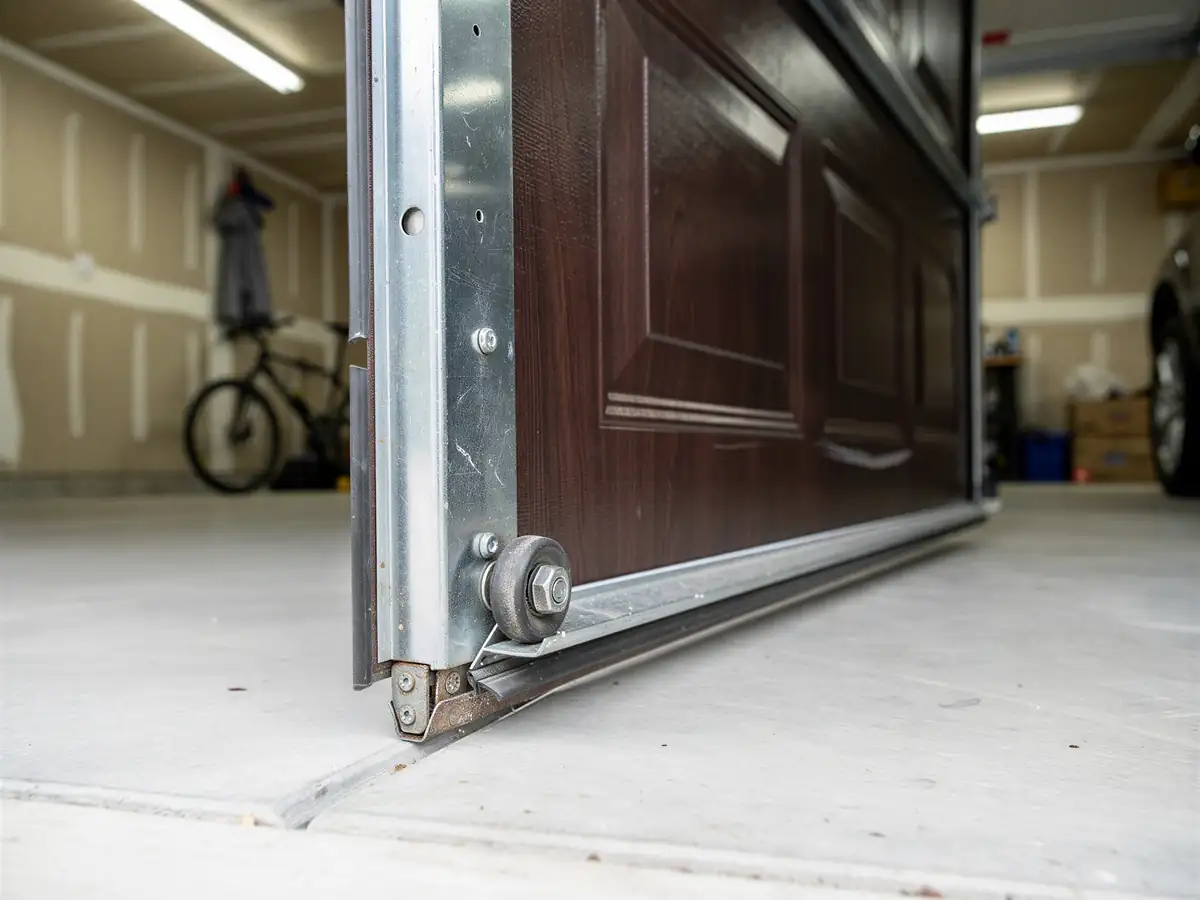
The first sign is usually sound, not a stuck door. A roller going bad grinds, squeals, or clunks as it rolls through the track, and the noise gets worse right as the door passes the bend where the track curves up toward the ceiling. Some owners notice the door shudder or hop slightly at that same spot - that's a roller with a flat spot or a worn stem catching on the track lip instead of rolling through it clean.
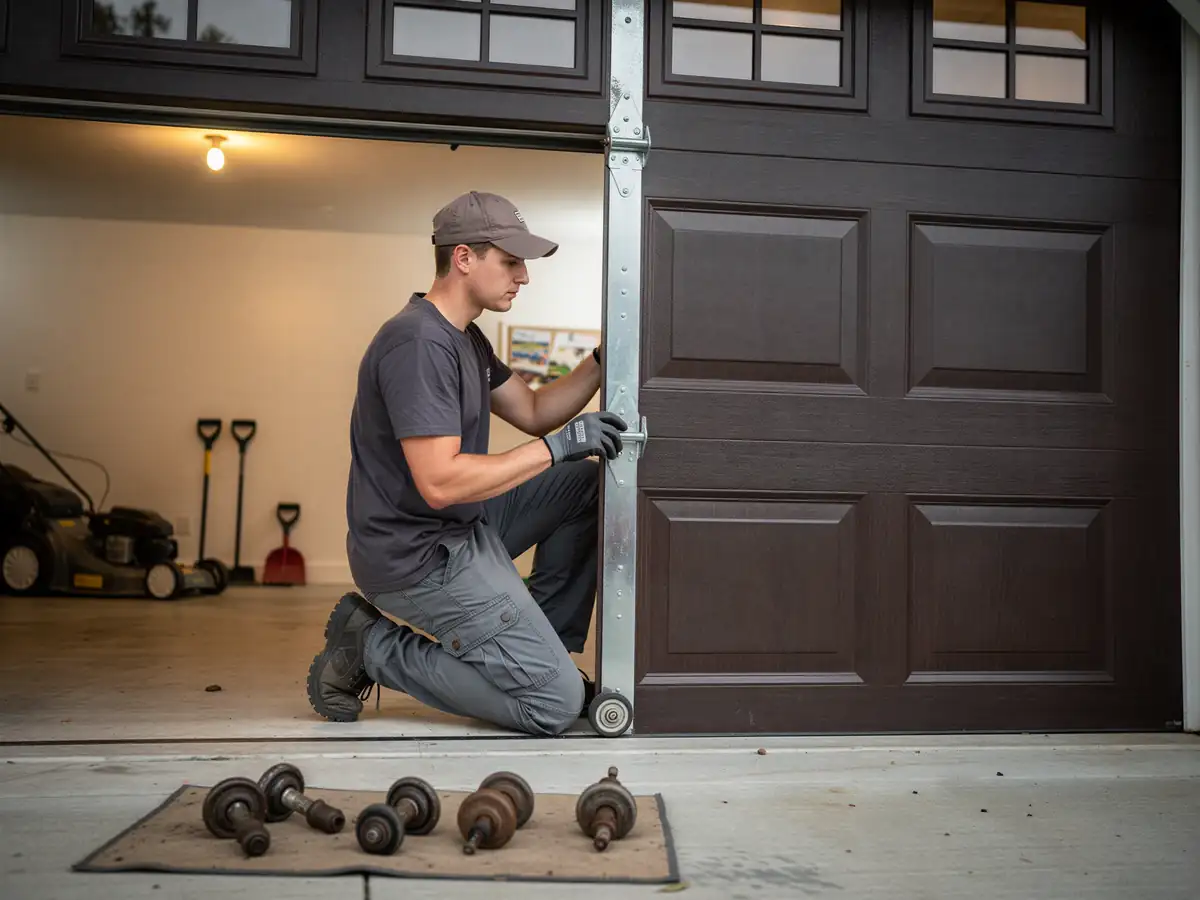
On older steel rollers, you'll sometimes see rust flake off onto the floor under the track, or notice the door running noticeably slower than it used to, especially on a cold morning. If one roller near the bottom corner is worse than the rest, that's often the one carrying the most weight every cycle, and it wears out first. Left alone, a bad roller doesn't stay a small problem - it chews up the track edge, and eventually you're replacing track instead of a $6 roller. If the door is jumping the track entirely or binding hard enough that the opener strains against it, stop running the opener and call before you force it further.
How We Fix It
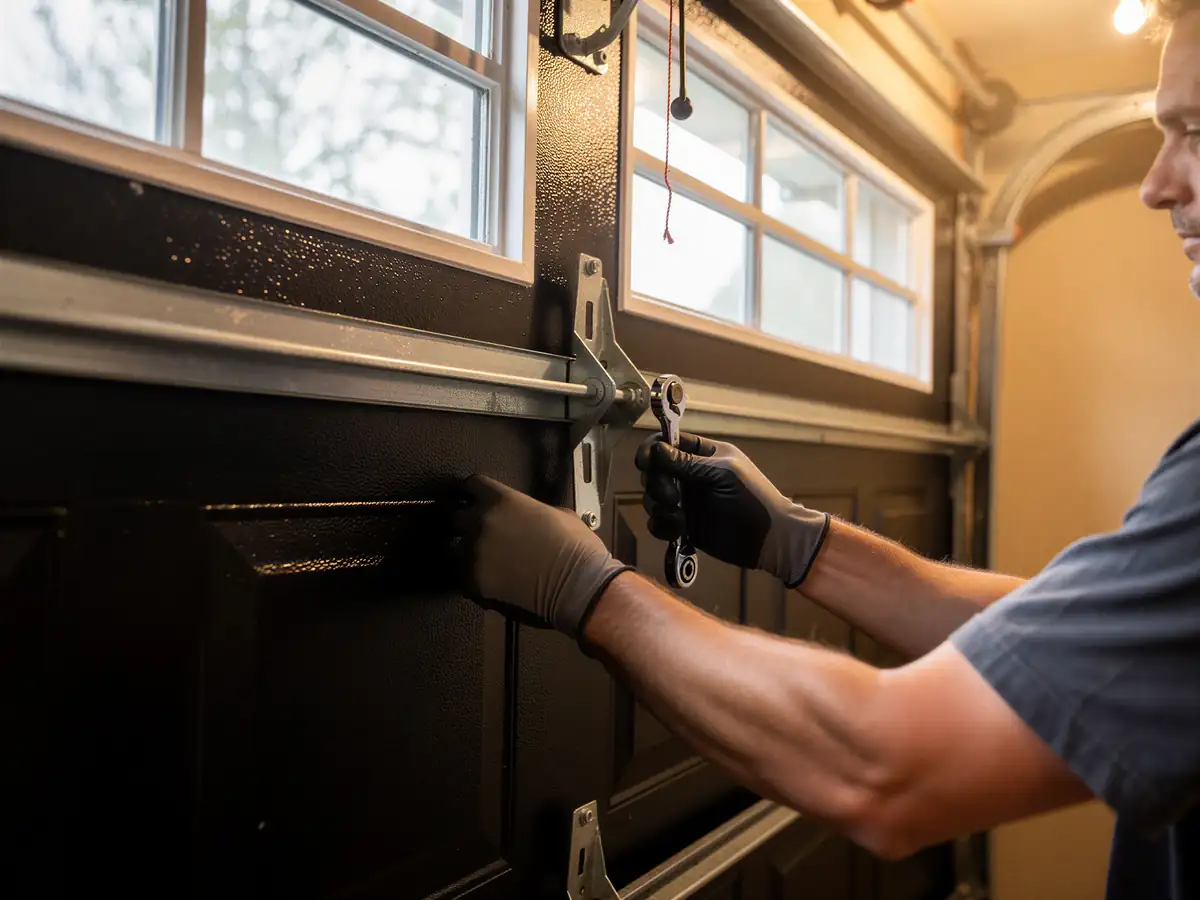
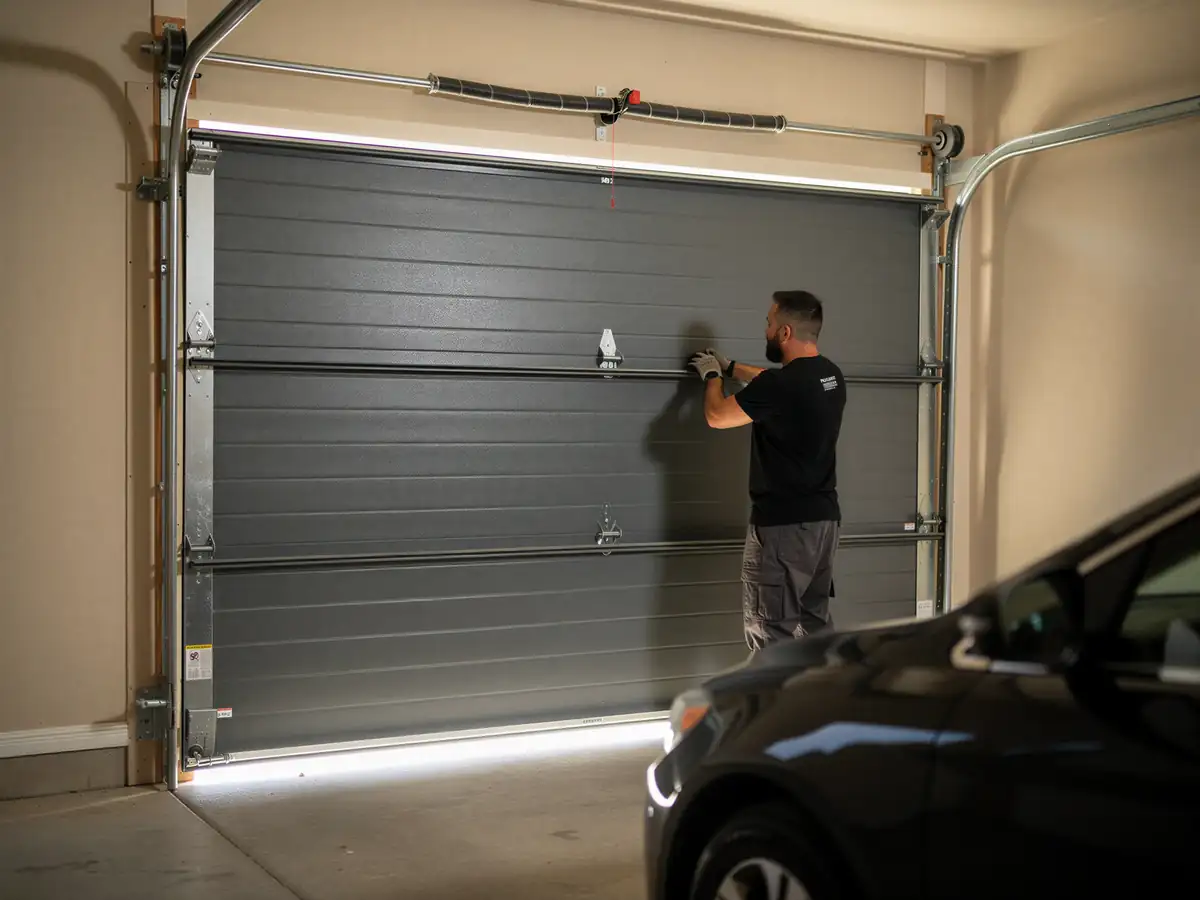
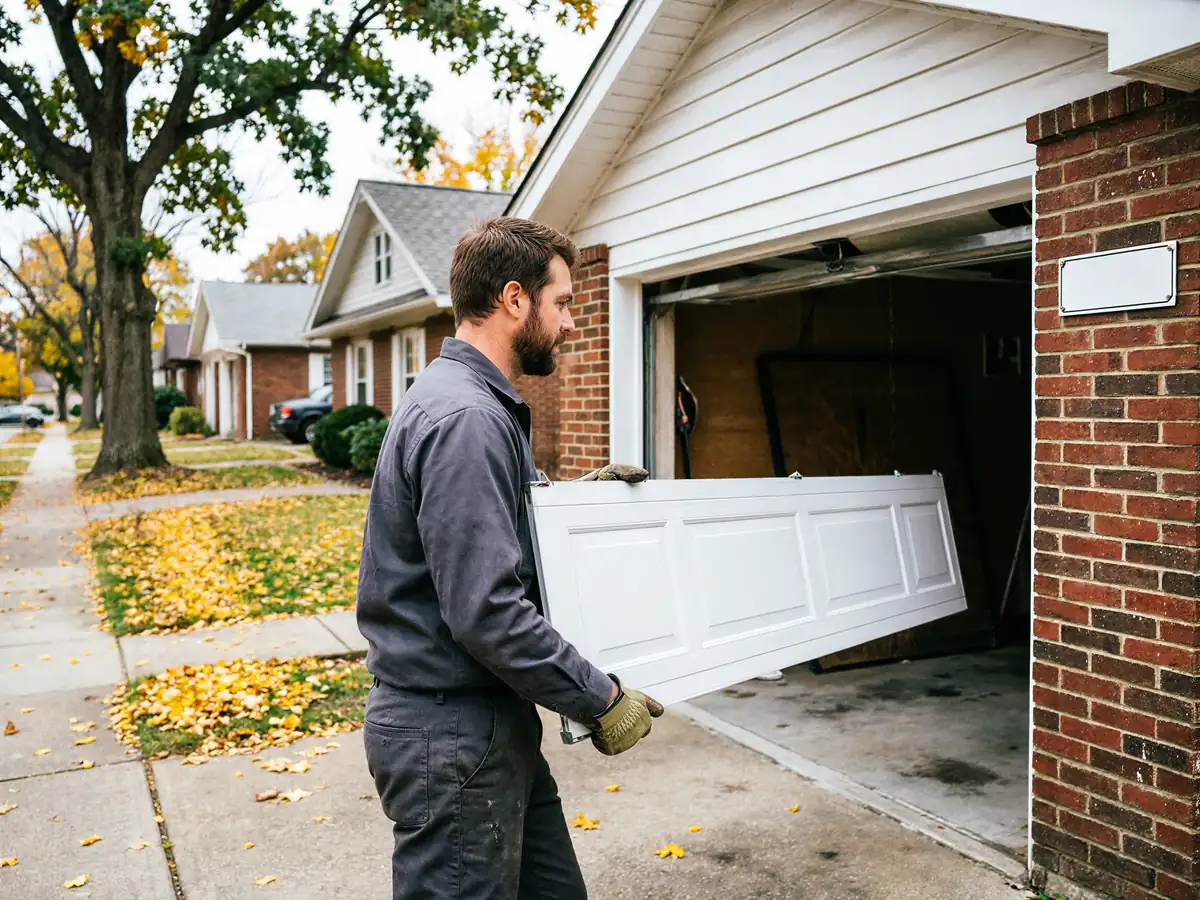
We don't just grease the rollers and call it done - if the stem is worn or the bearing's shot, grease buys you a week, not a fix. We pull the door section by section, swap worn rollers for ones matched to your track gauge, and check that the roller stem seats straight in the hinge before we move to the next one. Nylon rollers with sealed bearings run quieter and don't need regular oiling, which is why most replacements go that direction unless the door's hardware calls for something else.
We also check the track itself while we're in there. A roller that's been grinding for months can dent or widen the track channel, and a new roller in a damaged track will fail again fast - that part sometimes means a track section swap, not just rollers, and we'll tell you plainly if that's what we're looking at rather than sell you a roller job that won't hold.
One limit worth saying up front: if the door is badly out of square or the opener has been fighting a bad roller for a long time, sometimes the honest call is a new door section rather than another repair stacked on top of the last one.
Getting It Booked In
Call and describe what the door is doing
The grinding spot, where in the cycle it happens, whether it's one roller or several sounding off. That tells us whether to bring a handful of replacement rollers or plan for a track inspection too.
We cover Ankeny and run out to the surrounding towns on the same truck route, including Saylorville, Alleman, Elkhart, Johnston, Polk City, Bondurant, Altoona, Pleasant Hill, Windsor Heights, Grimes, Urbandale, Slater, Huxley, Granger, Clive, Mitchellville, Madrid, Maxwell, Carlisle, Waukee, Norwalk, Woodward, Cumming, Colfax, Runnells, Dallas Center, and Prairie Trail
Prairie Trail sits closest, just a couple miles southwest, and shares a lot of the same build era as the rest of the area.
Why This Fails Locally
Housing in the service area mostly went up between 1941 and 2009, with the median landing around 1993 and the bulk of it in that 1980s-to-90s stretch across the named subdivisions here. That era is exactly when steel rollers with unsealed bearings shipped standard on most production garage doors - fine hardware at the time, but it's now 30-plus years old on a lot of these doors and well past its working life.
The cold-moderate climate here doesn't help. Factory grease thickens in low temperatures, and a roller that's already got some wear in the bearing binds up worse once the stem can't turn freely in the cold. That's why a roller that's been limping along all fall will often seize or crack in the first hard cold snap - it's not a new problem, it's an old one finally showing itself. Across the 85,219 households and 46,052 owner-occupied houses this shop reaches, that combination of original-era hardware and real winter cold is the single most common reason we get roller calls, more than any other single fault on the door.