How It Shows Up
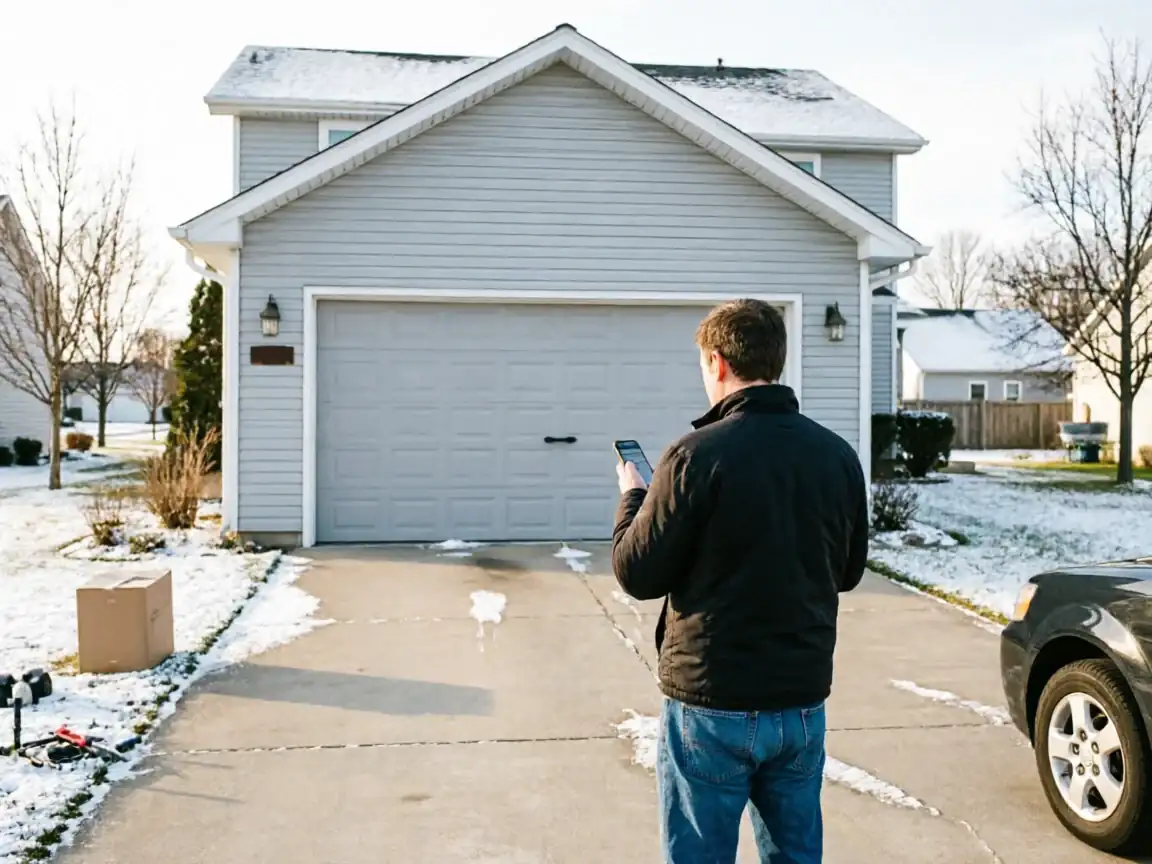
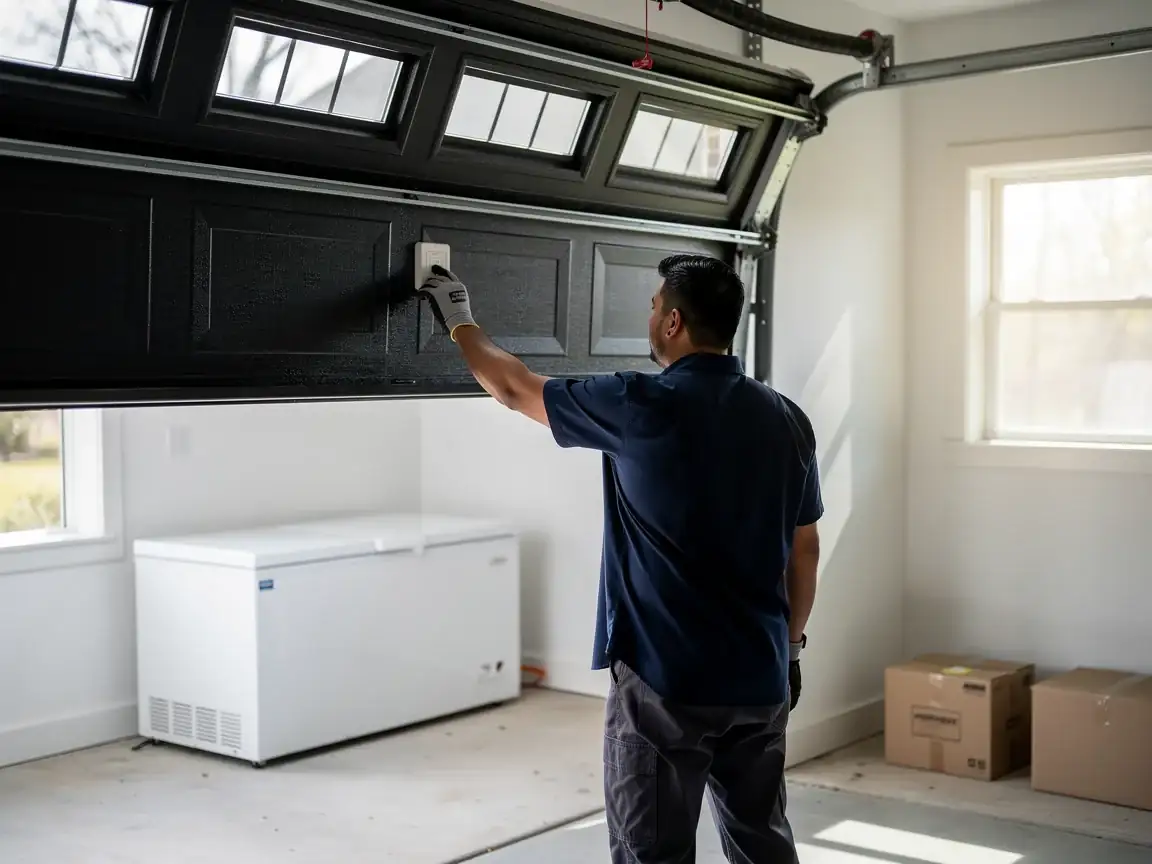
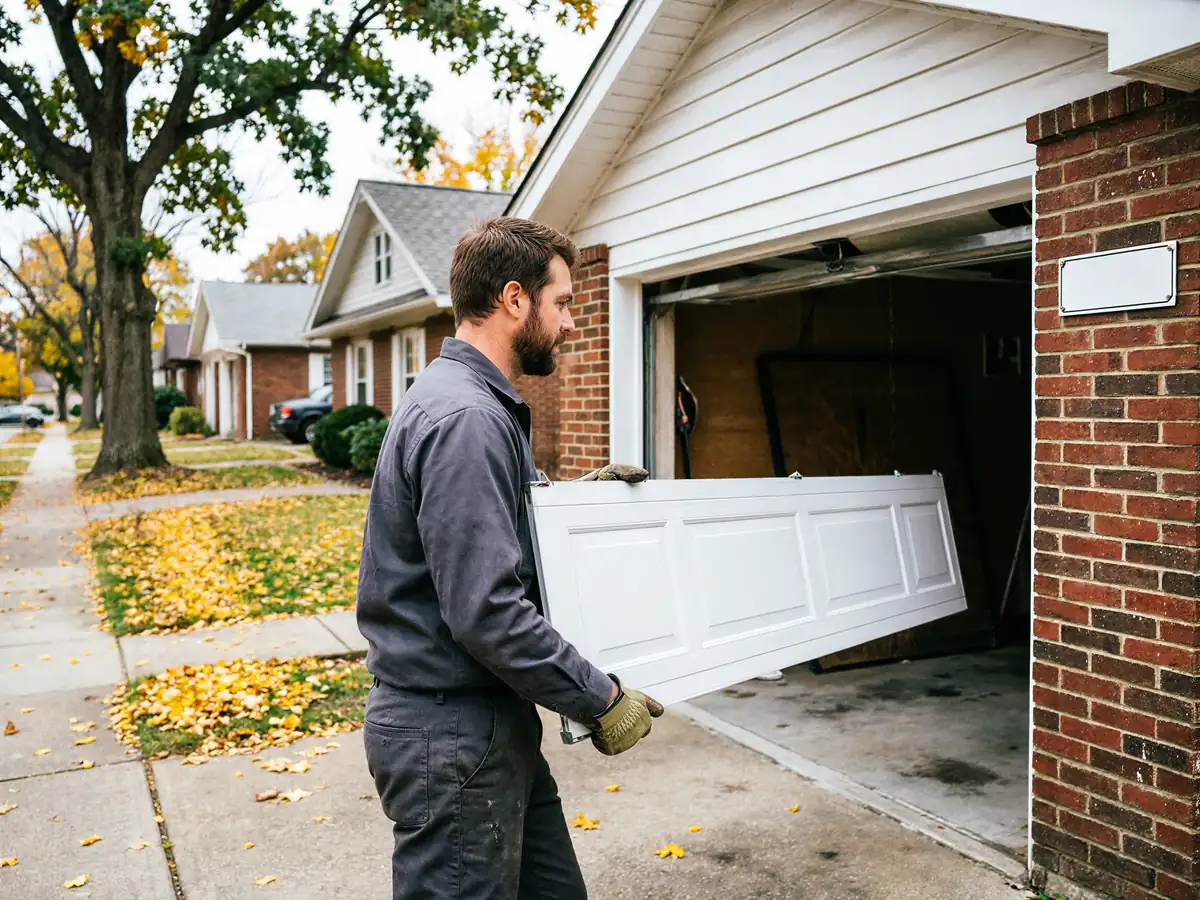
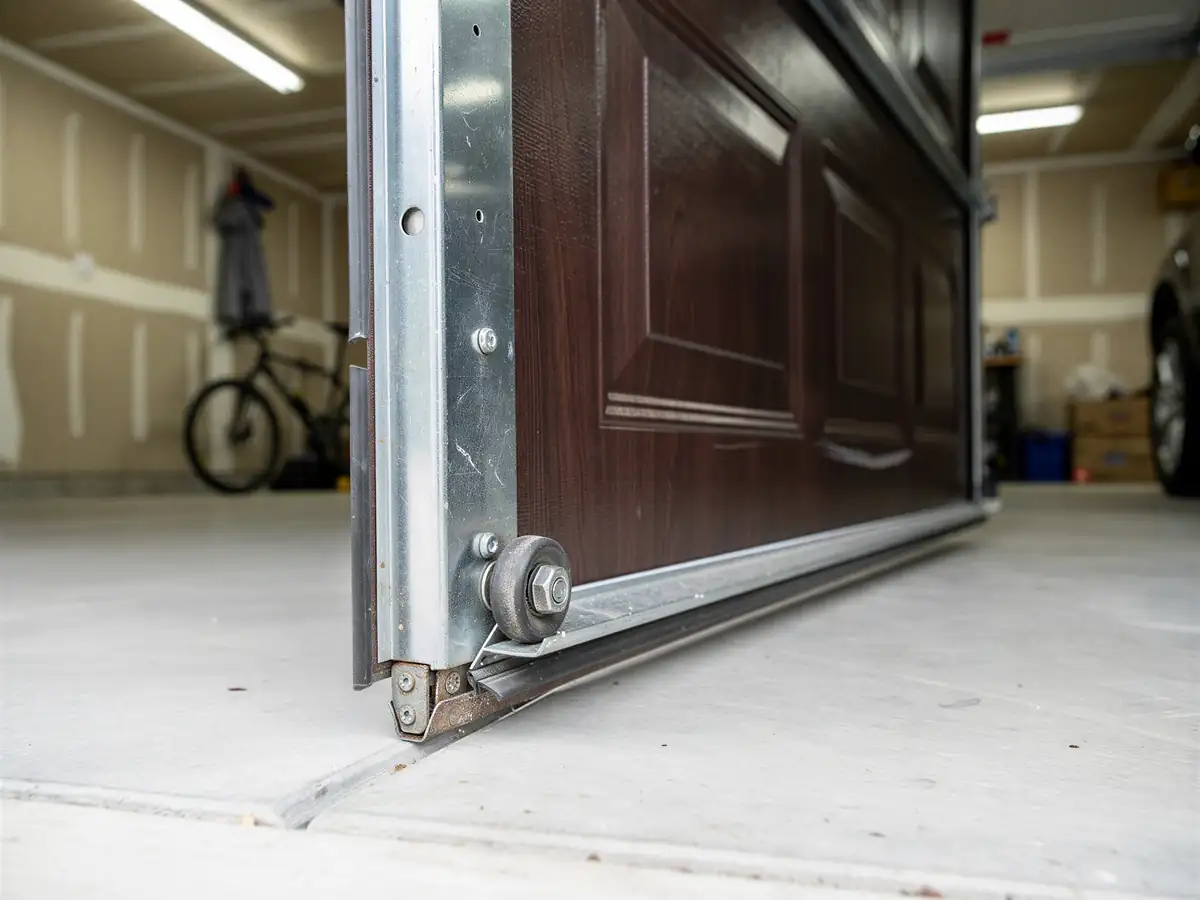
A door off track rarely happens all at once. It usually starts as a thump or a scrape near one corner, then the door starts riding crooked in the opening - tight on one side, gapping on the other. Sometimes a roller has popped clean out of the track. Sometimes the track itself has pulled away from the jamb where the lag screws anchor it to the framing. In homes built in the 1980s and 90s, which make up most of the stock across this service area, that framing was often shimmed and squared to builder-grade tolerances that have since settled, so the track brackets work loose a little more every winter. You'll also see it after a car clips the bottom bracket, or after a spring lets go and the door drops unevenly and torques the track on one side. Either way, a door that's off track is not a door to force. Hitting the opener button again just bends the track further or pulls the bracket out of the stud, and that turns a twenty-minute fix into a track replacement. If the door is visibly tilted, has come out of the track on one side, or won't move without grinding, that's the point to stop and call rather than keep running the opener.
How We Fix It
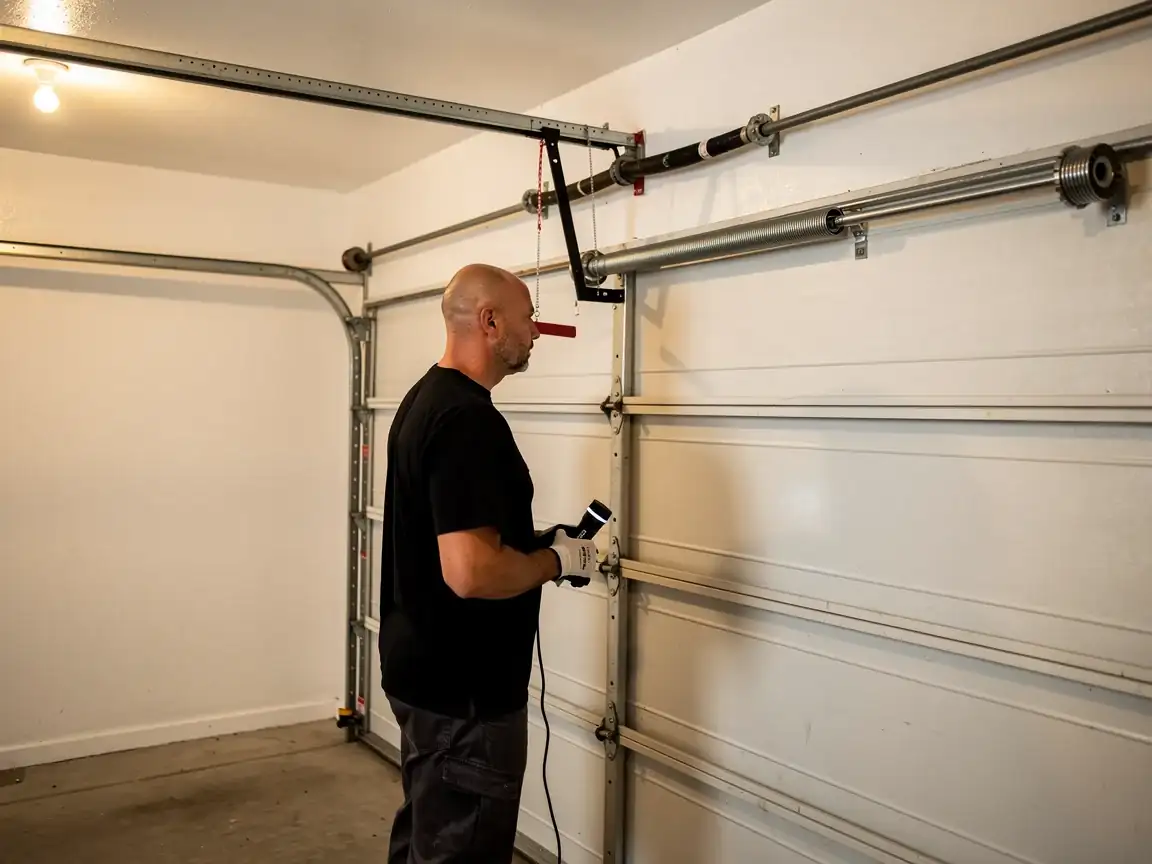
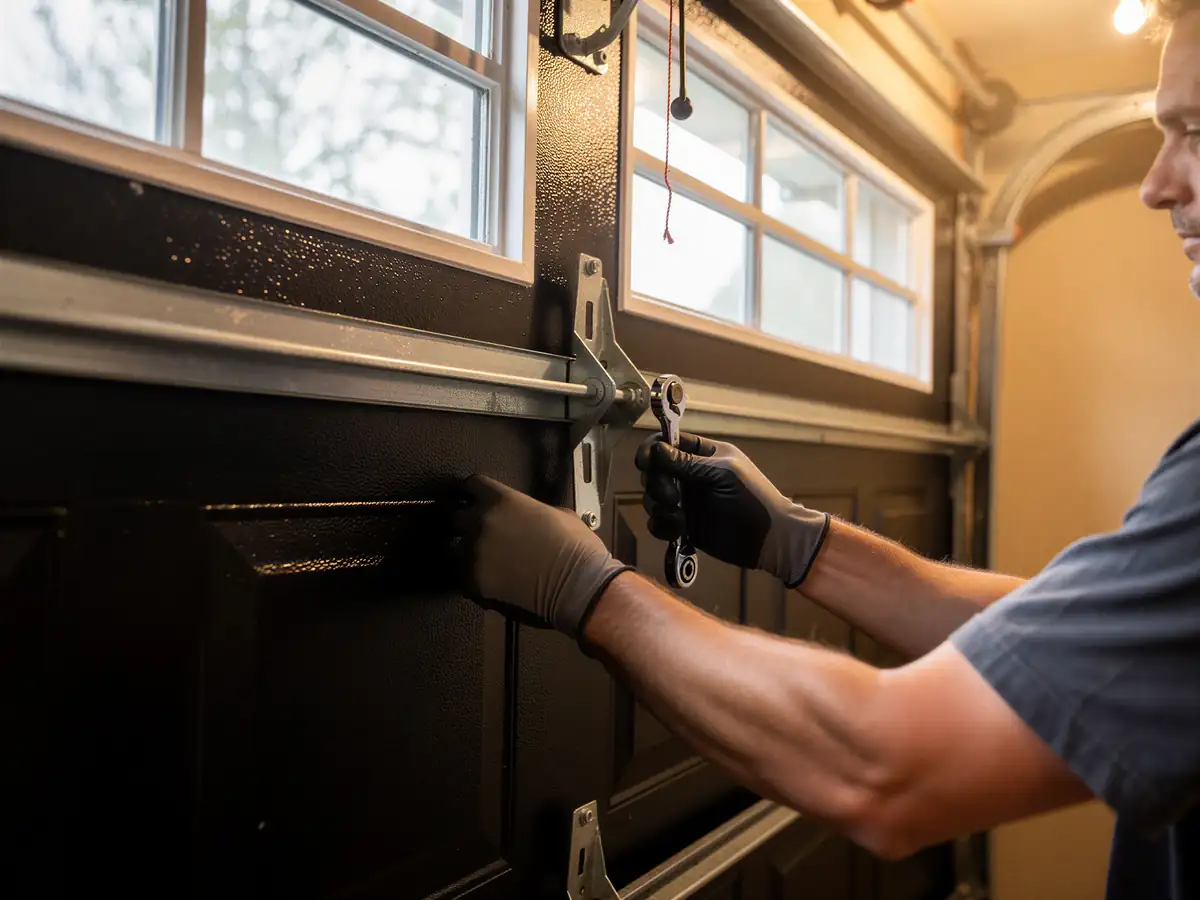
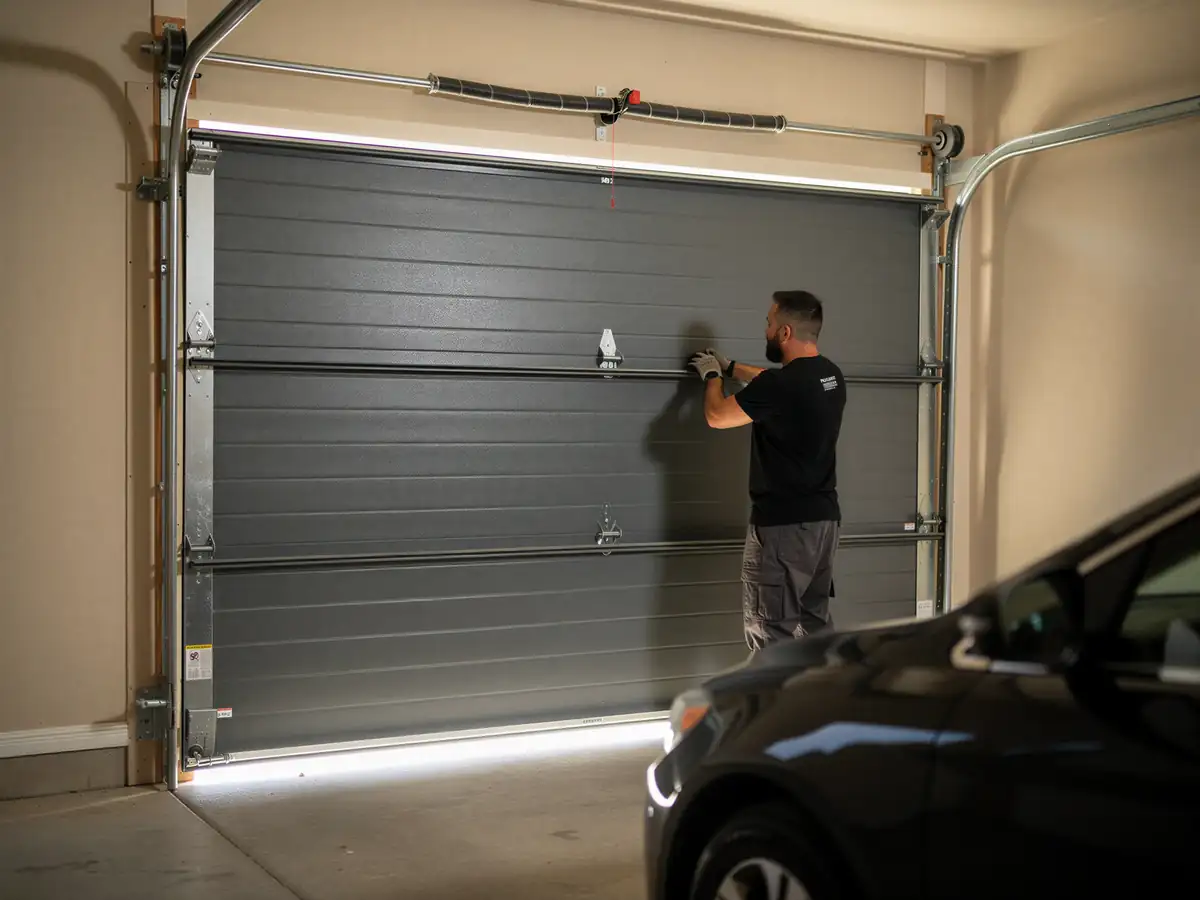
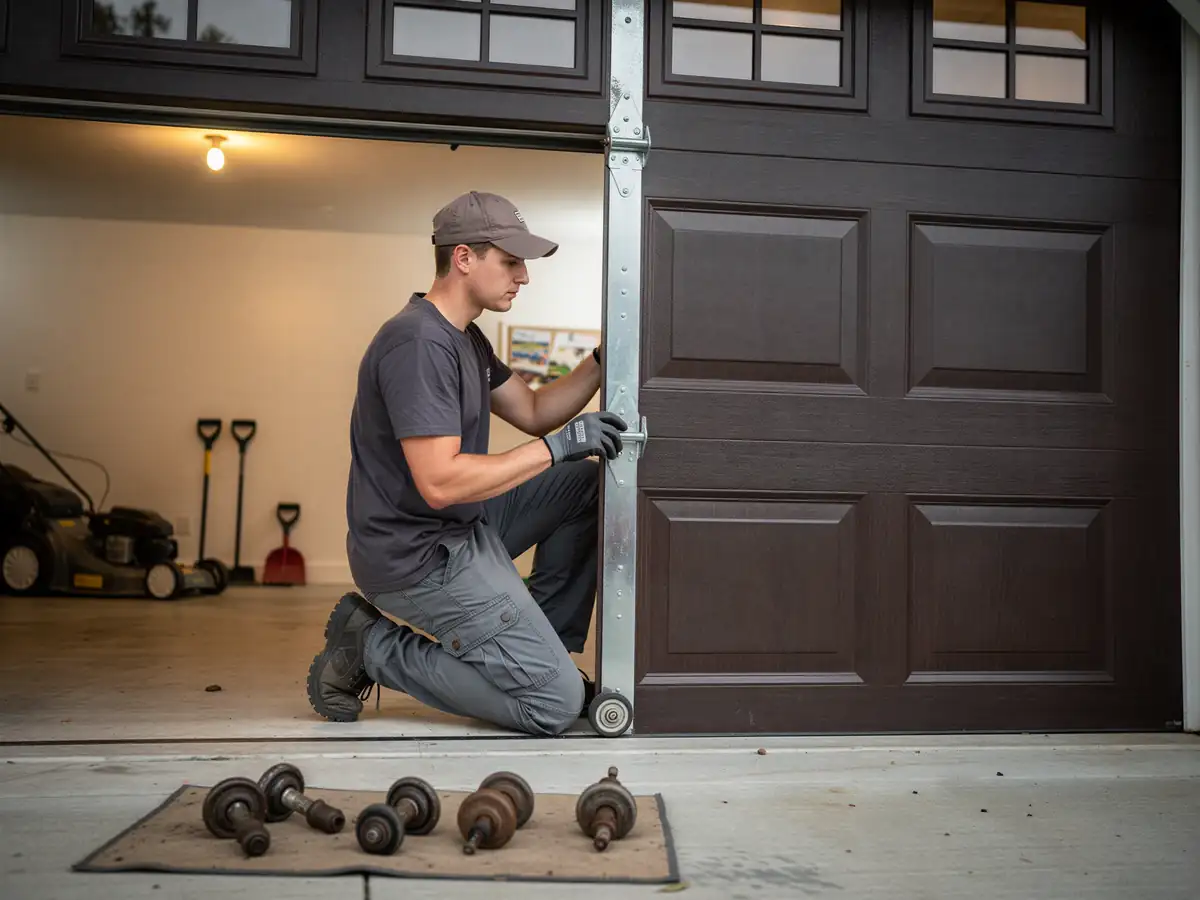
First we check whether the track is bent or just knocked loose - those are two different jobs and we tell you which one you've got before we touch anything. A loose track usually means re-anchoring the brackets to solid framing and resetting the rollers, checking the whole run for square as we go. A bent track has to come off; we don't hammer a track back straight, because it never holds and it stresses the rollers that run through it on the next cold snap. While we're in there we check the cables and the spring tension too, since a door that's off track is often a door that was already fighting a weak spring or a frayed cable, and leaving those alone just brings you back to square one. One honest limitation: if the track is bent in more than one place or the bracket has torn out of rotted or damaged framing, that's a job that may need to wait on us sourcing the right length of track rather than something we finish on the first visit. We'd rather tell you that up front than rush a fix that comes back apart in a week.
Why This Fails Locally
Most of the homes we work on in and around Ankeny were built between 1941 and 2009, with the bulk going up in the 1980s and 90s across the 26 communities we cover. That generation of garage door hardware used lighter-gauge track and bracket hardware than what gets installed today, and after three decades of seasonal movement, those brackets are due for attention whether or not anyone's hit the door with a bumper. Layer on the climate here - Ankeny sits in a cold-moderate band, which means the slab and the framing the track is bolted to both go through real freeze-thaw cycling every winter. Concrete shifts slightly, wood framing swells and shrinks, and the track anchors that were snug in October are a little looser by February. That's a different failure pattern than you'd see in a warm-climate market with newer construction, where off-track complaints are almost always impact damage rather than age and weather working on the hardware. Here it's often both at once - older brackets loosened by thirty winters, then finished off by one scrape from a car bumper or a spring that let go unevenly. Knowing which cause you're dealing with changes whether the fix is a $0 phone diagnosis or a bracket and track job.