What Can Go Wrong
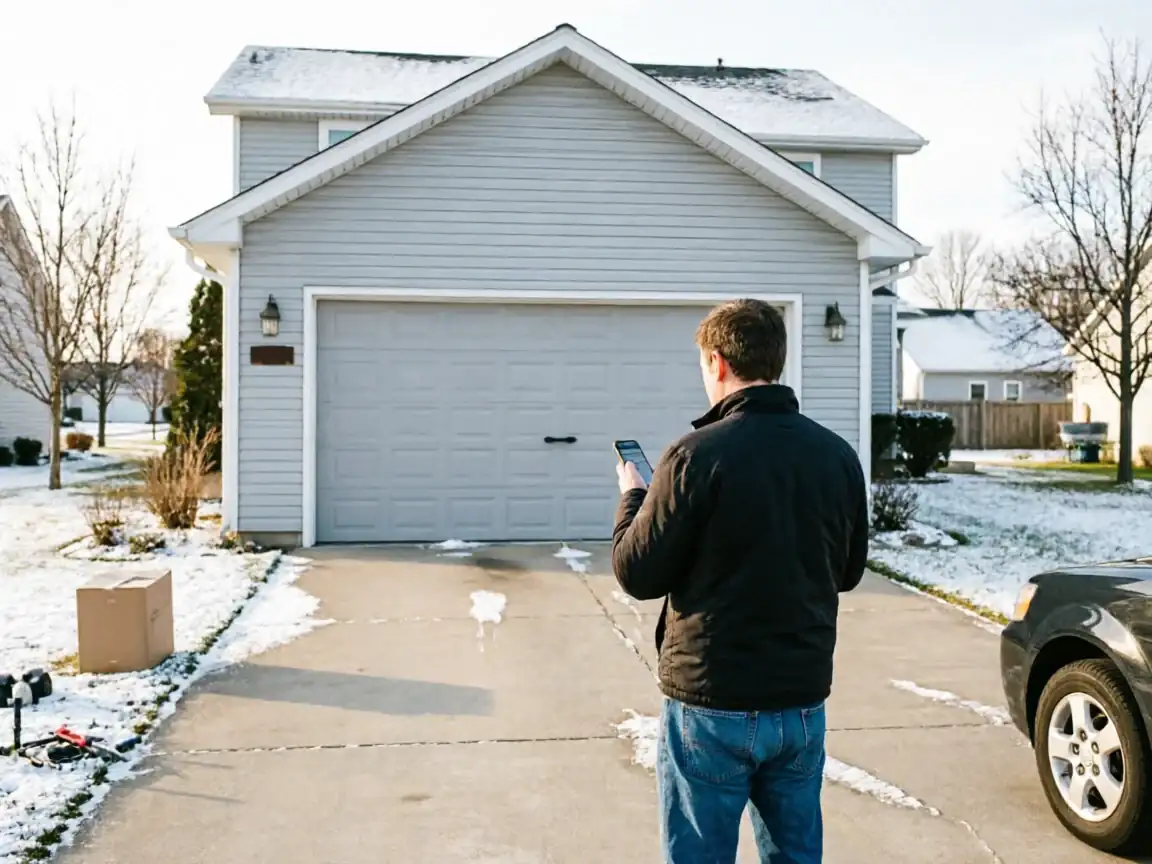
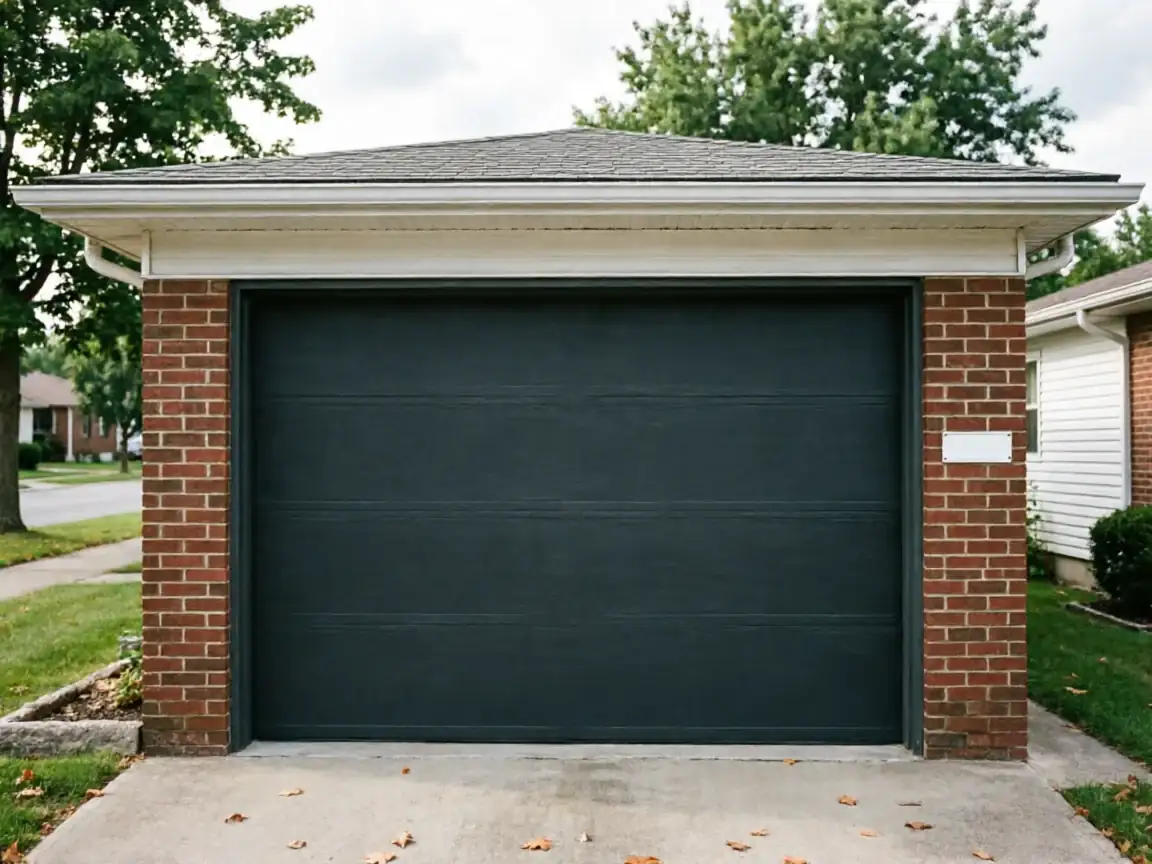
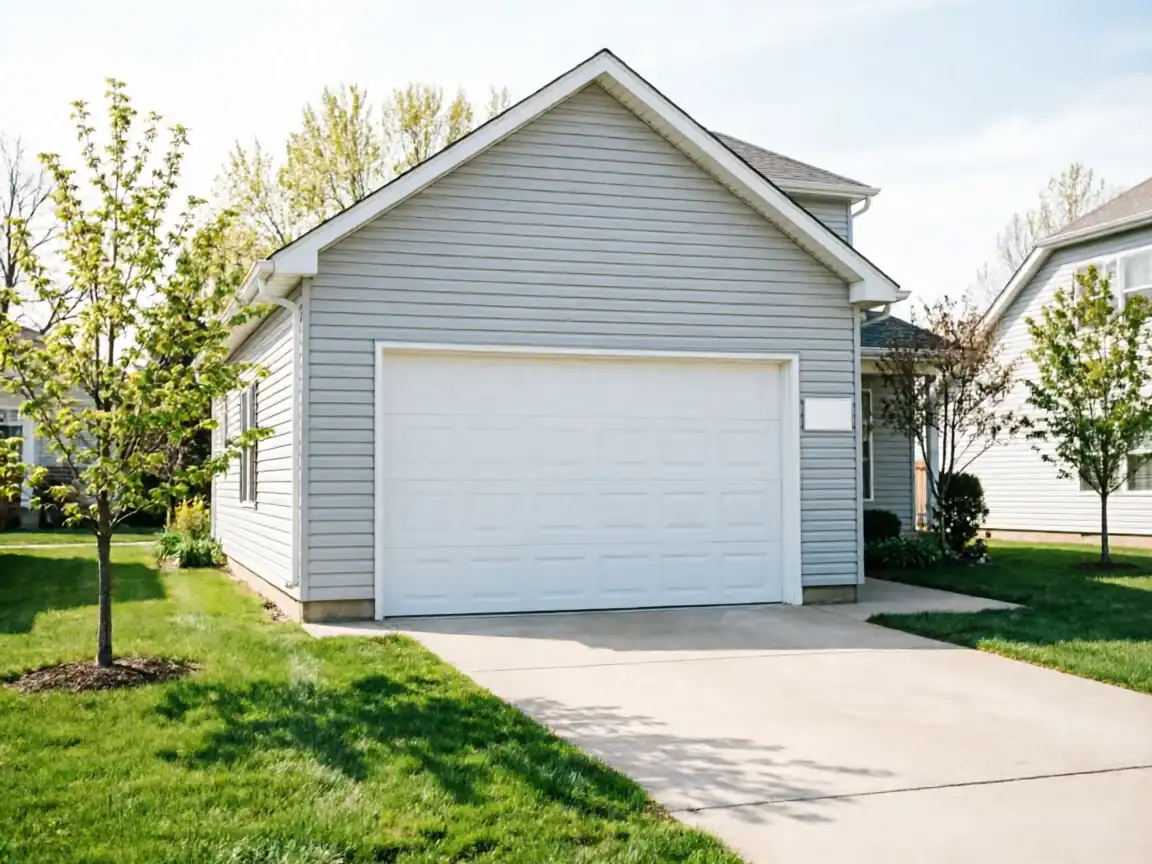
Most of Ankeny Garage Door Pros' service area has doors going back to the early 1990s on average, but Bondurant's housing is newer - the typical home here was built around 2009, close to the newest end of the whole region's range. That matters for panel work because newer doors are almost always factory steel, often insulated, built to a code and wind-load standard that older doors in the wider area never had to meet. When a panel on one of these doors gets dented or cracked, you're usually not dealing with warped wood or rusted-through steel from decades of weather. You're dealing with a single impact point - a backed-into door, a thrown object, hail dimpling - on a frame that's otherwise sound. The fix is narrower in scope but the panel itself can be pricier to source because it's a specific insulated profile rather than a generic flat steel section. We also see hardware that's held up well simply because it hasn't had the years to wear, so a panel job here rarely turns into a full hardware replacement the way it sometimes does on a 1960s door.
How It Shows Up
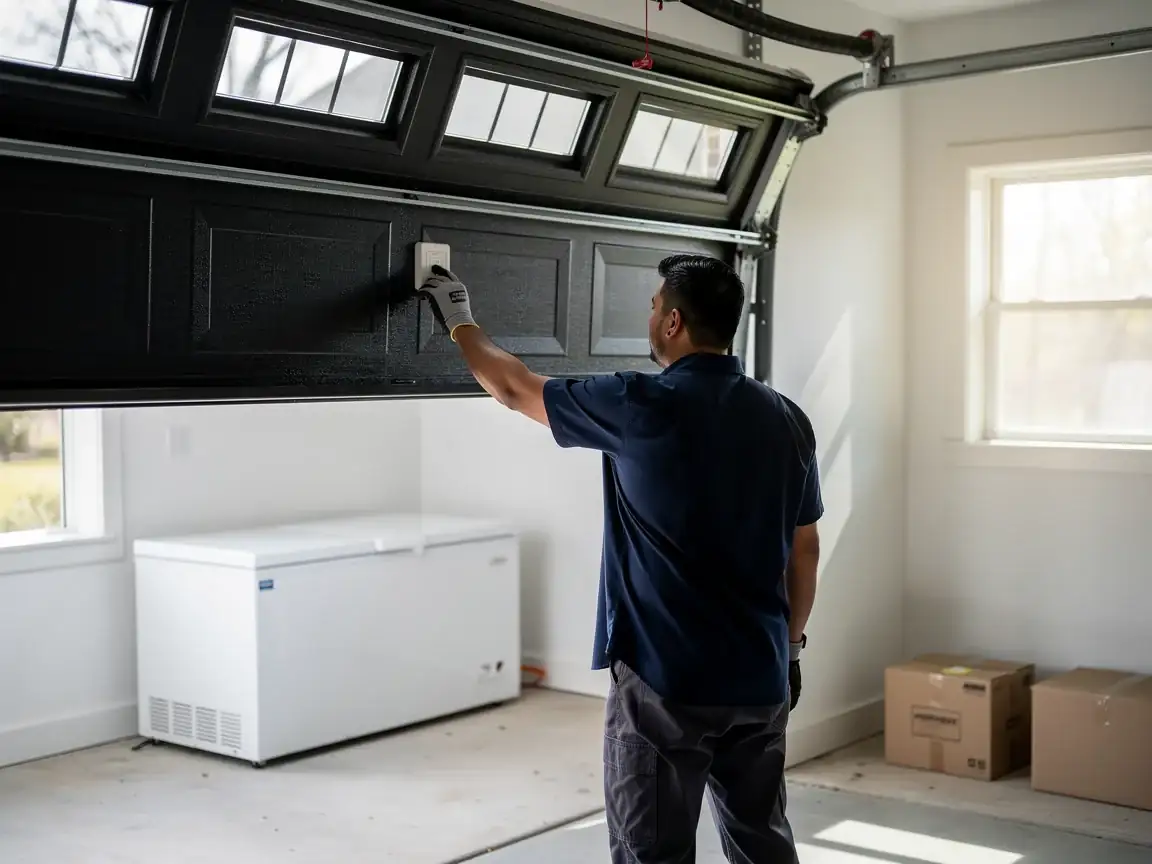
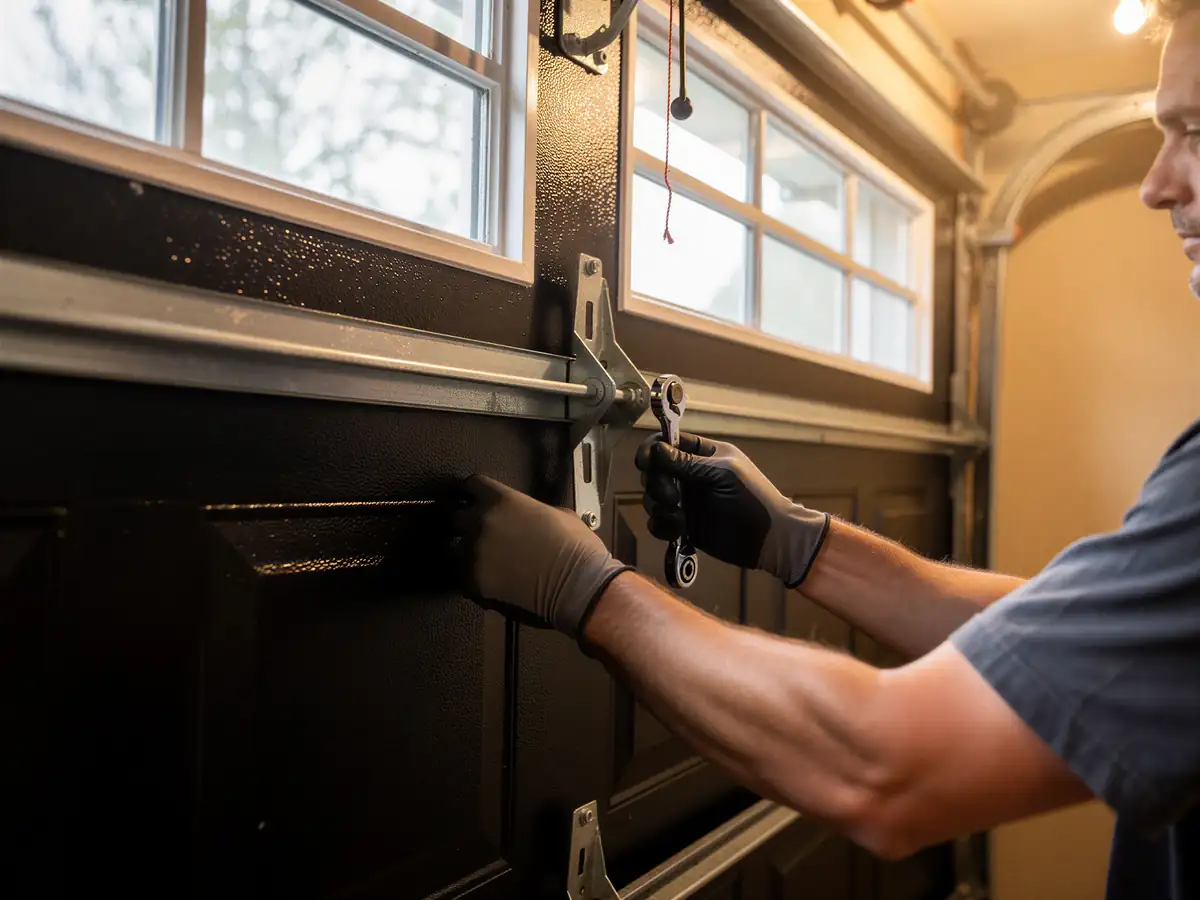
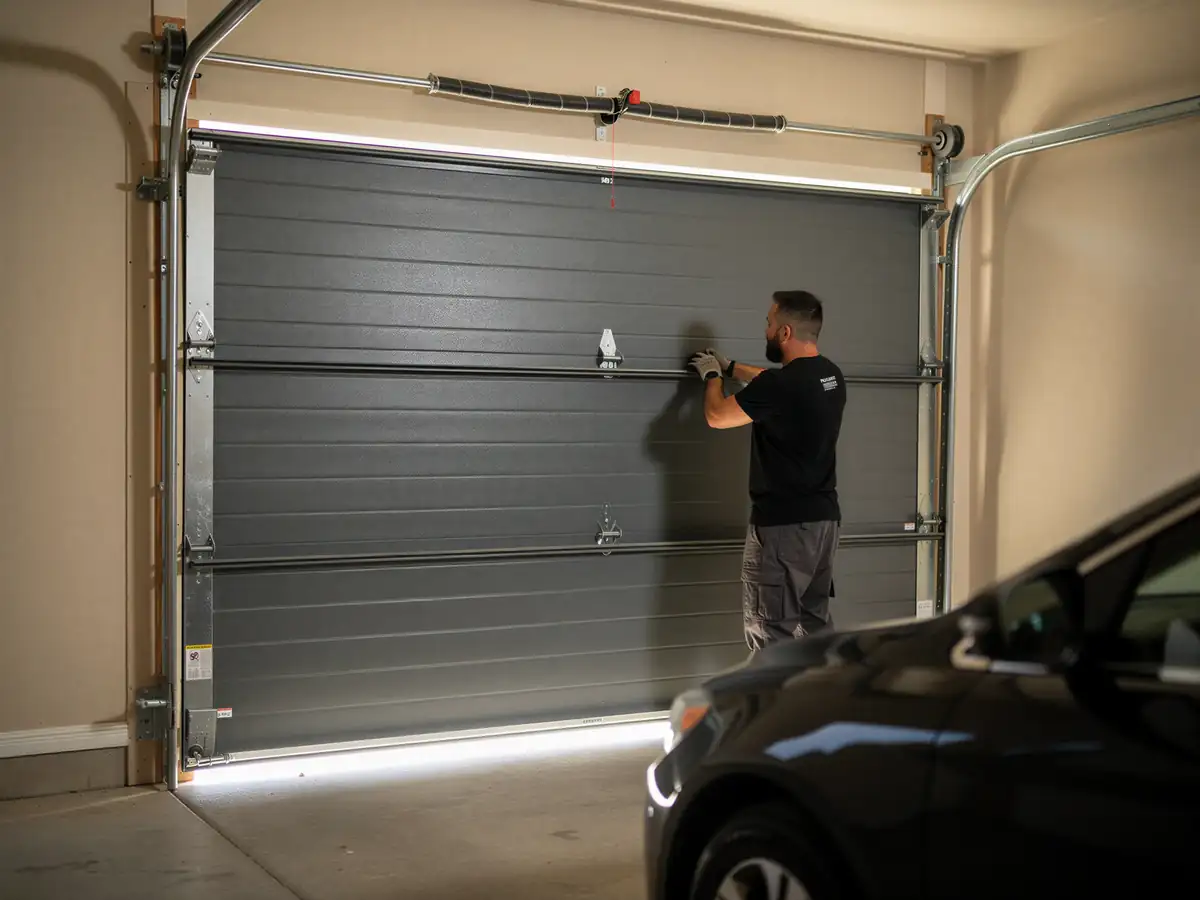
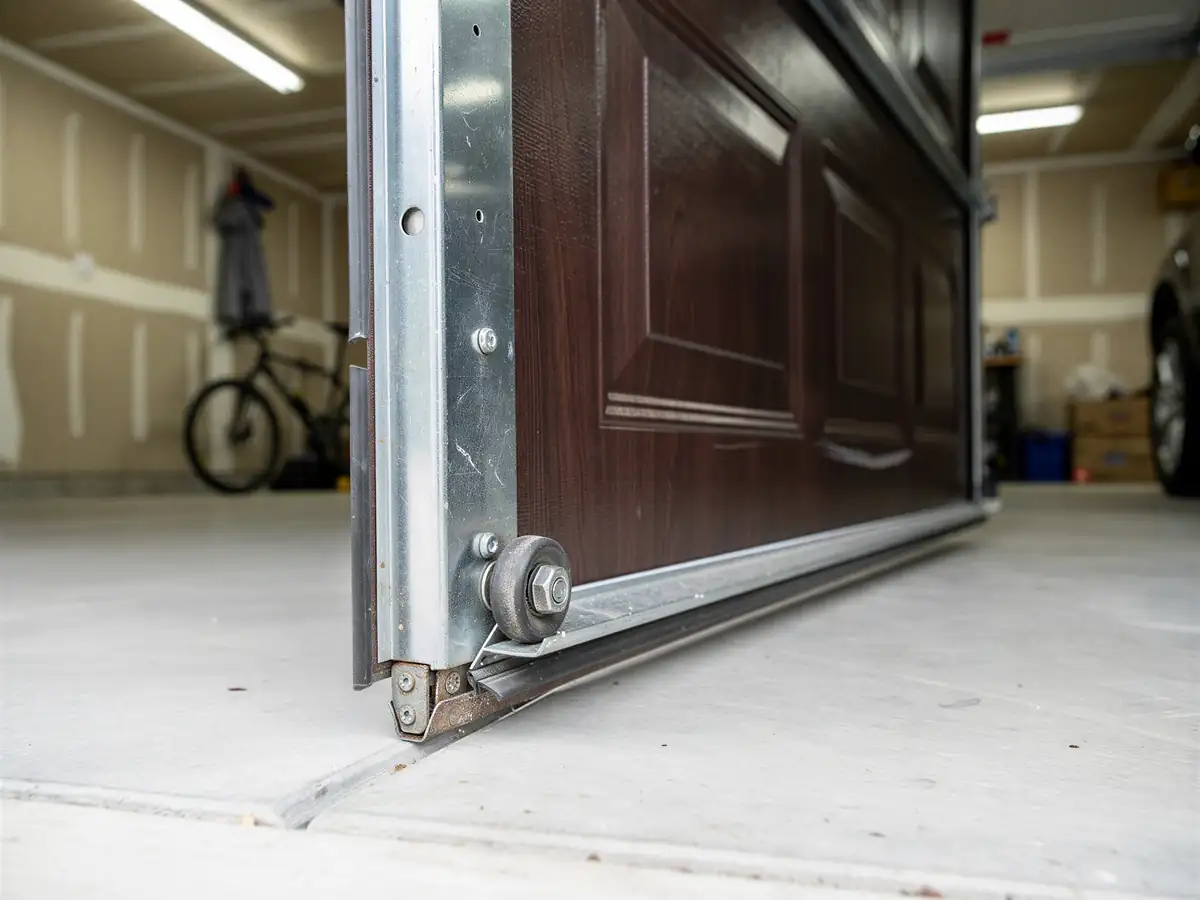
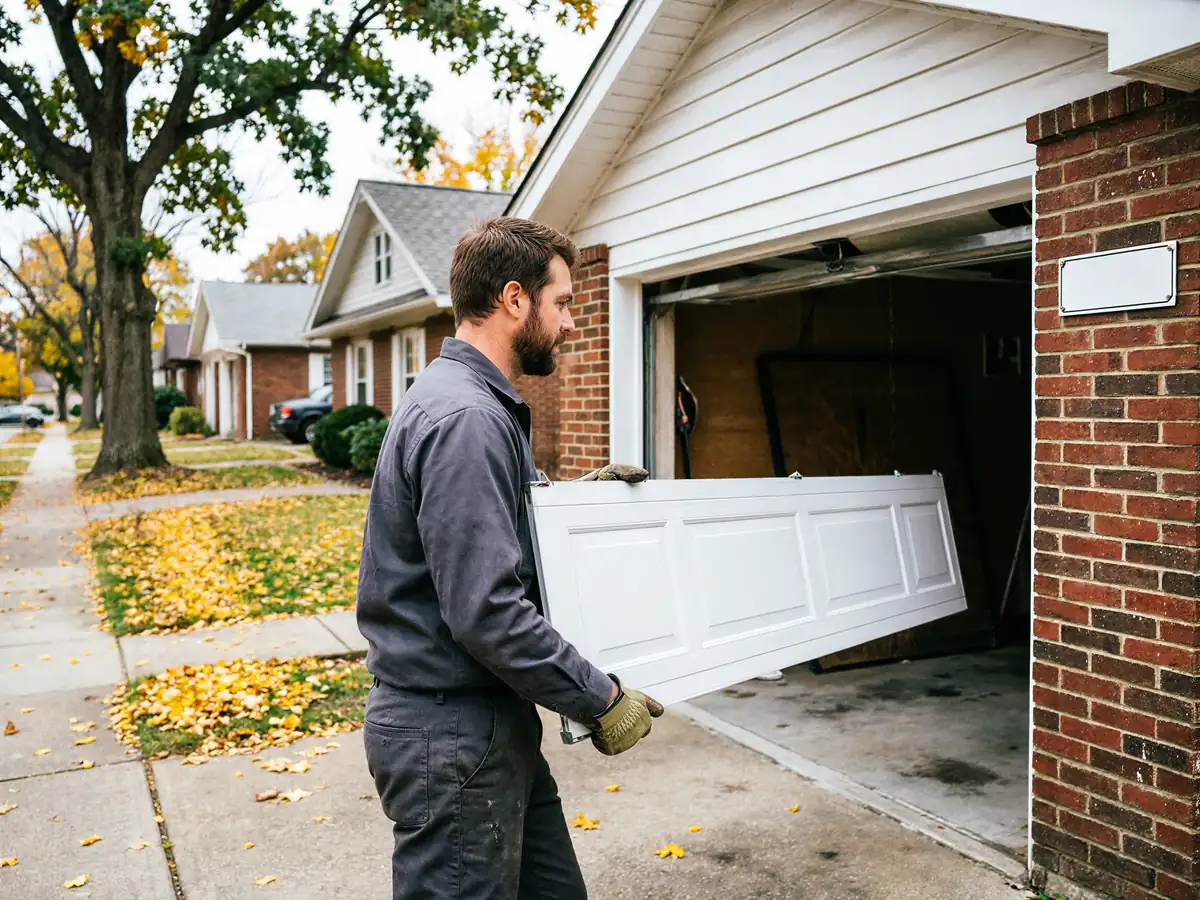
On a newer insulated door, panel damage usually looks clean at first - a crease or a dent in one section, paint still intact, foam core visible if the skin splits. The door often still opens and closes fine because the track and rollers haven't aged into misalignment, which can fool a homeowner into thinking it's cosmetic. It isn't always. A cracked panel on a steel door can let moisture into the foam core, and in Bondurant's cold winters that moisture freezes and expands, widening the crack over a season or two. We also see impact damage concentrated on the bottom one or two panels - cars backing out, kids' bikes, a trailer hitch - since those take the brunt of contact. Because the housing stock here skews newer, we're less likely to find the panel has already been hit before; it's usually a first-time repair rather than a patch on a patch.
The Cost of This Job
We don't have a flat number to quote here - panel pricing depends on the door's manufacturer, whether it's insulated, and whether the section is still in production, and we won't guess at a figure we can't back up. What we can say is that newer, insulated panels generally cost more per section than the older single-skin steel we replace elsewhere in the service area, so a single-panel job on a 2000s-era Bondurant door isn't automatically cheaper than a multi-panel job on an older house. One honest limitation: if the exact panel profile has been discontinued by the manufacturer, even a newer door can be hard to match, and at that point we'll tell you straight whether a full door replacement makes more sense than chasing one panel.